'%3e%3cpath%20d='M923.21,488.13c-3.16-7.79-8-17.56-17.57-23.98-7.1-4.71-15.4-7.26-26.92-8.25h-.1c-10.32-.4-20.27,1.96-29.91,4.23-4.24,1-8.63,2.04-12.86,2.79-.6,.09-1.21,.19-1.82,.29-6.34,1.01-12.33,1.96-16.47-2.28-4.53-4.5-7.47-10.23-10.59-16.29-.45-.87-.9-1.74-1.35-2.61-.72-1.39-1.44-2.8-2.16-4.23-4.16-8.22-8.45-16.73-15.65-23.28-18.43-15.29-34.28-18.48-54.69-10.97-22.67,8.36-37.54,33.4-42.24,54.59-2.87,15.38-2.15,32.19,2.13,49.98l.45,1.85,7.53-1-.13-1.98c-.85-12.5-1.5-25.81,.63-39.05,.24-1.82,.61-3.79,.97-5.69,.12-.62,.23-1.23,.34-1.83,4.21-17.82,16.55-38.81,34.65-45.55,15.72-5.72,26.37-3.71,40.67,7.66,6.3,4.96,10.7,13.81,15.36,23.17,5.29,10.63,10.77,21.63,19.58,27.24,9.41,5.91,24.21,2.42,38.51-.96,10.72-2.53,21.81-5.15,29.92-3.62l.12,.02c12.7,1.61,20.97,6.61,26.03,15.76,2.9,5.15,4.68,9.37,5.58,13.21,2.52,12.29-.58,26.58-9.2,42.48-4.39,8.11-10.97,15.51-20.12,22.64-4.9,3.85-10.66,7.32-16.23,10.67-3.81,2.29-7.75,4.66-11.4,7.15-20.44,14.22-31.7,35.12-40.01,53.69l3.67,2.08c1.54-2.21,3.06-4.45,4.58-6.68,4.48-6.59,9.11-13.41,14.4-19.52,8.3-9.69,17.35-17.36,26.89-22.78,1.41-.81,4.32-2.51,6.88-4.01,1.58-.92,3.03-1.77,3.91-2.29,14.97-8.65,25.81-17.81,33.19-28.03,6.62-9.57,11.72-20.52,14.35-30.83,3.21-12.58,2.9-23.94-.94-33.77Z'/%3e%3cpath%20d='M214.5,531.7c6.65,3.39,11.75,8.22,15.29,14.51,3.54,6.29,5.32,13.7,5.32,22.22s-1.77,15.91-5.32,22.16c-3.54,6.25-8.64,11.03-15.29,14.33-6.65,3.31-14.51,4.96-23.59,4.96h-25.92v-83.27h25.92c9.08,0,16.94,1.69,23.59,5.08Zm1.02,60.69c5.65-5.69,8.48-13.68,8.48-23.95s-2.85-18.44-8.54-24.25c-5.7-5.81-13.88-8.72-24.55-8.72h-15.05v65.46h15.05c10.75,0,18.95-2.85,24.61-8.54Z'/%3e%3cpath%20d='M260.31,535.46v27.83h30.34v8.96h-30.34v28.67h33.93v8.96h-44.8v-83.38h44.8v8.96h-33.93Z'/%3e%3cpath%20d='M376.19,609.89h-10.87l-43.72-66.3v66.3h-10.87v-83.38h10.87l43.72,66.18v-66.18h10.87v83.38Z'/%3e%3cpath%20d='M445.96,526.62v8.84h-22.7v74.42h-10.87v-74.42h-22.82v-8.84h56.39Z'/%3e%3cpath%20d='M508.55,591.37h-36.32l-6.69,18.52h-11.47l30.1-82.79h12.54l29.98,82.79h-11.47l-6.69-18.52Zm-3.11-8.84l-15.05-42.05-15.05,42.05h30.1Z'/%3e%3cpath%20d='M608.66,526.62l-31.42,83.27h-12.54l-31.42-83.27h11.59l26.16,71.8,26.16-71.8h11.47Z'/%3e%3cpath%20d='M631.48,526.62v83.27h-10.87v-83.27h10.87Z'/%3e%3cpath%20d='M718.8,526.62l-31.42,83.27h-12.54l-31.42-83.27h11.59l26.16,71.8,26.16-71.8h11.47Z'/%3e%3cpath%20d='M747.35,605.29c-6.37-3.62-11.41-8.68-15.11-15.17-3.7-6.49-5.55-13.8-5.55-21.92s1.85-15.43,5.55-21.92c3.7-6.49,8.74-11.55,15.11-15.17,6.37-3.62,13.42-5.44,21.15-5.44s14.89,1.81,21.26,5.44c6.37,3.62,11.39,8.66,15.05,15.11,3.66,6.45,5.5,13.78,5.5,21.98s-1.83,15.53-5.5,21.98c-3.66,6.45-8.68,11.49-15.05,15.11-6.37,3.62-13.46,5.44-21.26,5.44s-14.77-1.81-21.15-5.44Zm36.85-8.06c4.66-2.71,8.32-6.57,10.99-11.59,2.67-5.02,4-10.83,4-17.44s-1.33-12.52-4-17.5c-2.67-4.98-6.31-8.82-10.93-11.53-4.62-2.71-9.88-4.06-15.77-4.06s-11.15,1.35-15.77,4.06c-4.62,2.71-8.26,6.55-10.93,11.53-2.67,4.98-4,10.81-4,17.5s1.33,12.42,4,17.44c2.67,5.02,6.33,8.88,10.99,11.59,4.66,2.71,9.89,4.06,15.71,4.06s11.05-1.35,15.71-4.06Z'/%3e%3c/g%3e%3c/svg%3e)
Root Canal Treatment: Cost, Procedure and Recovery Explained

Written by Sedef Özdemir · Content Specialist

Medically reviewed by Dr. Mine Helvacıoğlu Özkardeş, Prosthodontist
14+ years of experience in smile design, veneers, and implant-supported restorations.
Last reviewed: October 23, 2026
Root canal has a reputation that outpaces the actual procedure. It’s a routine treatment that relieves pain rather than causing it, and it’s what lets you keep a tooth that would otherwise likely need to be extracted. Here’s what it actually involves.
What Is a Root Canal?
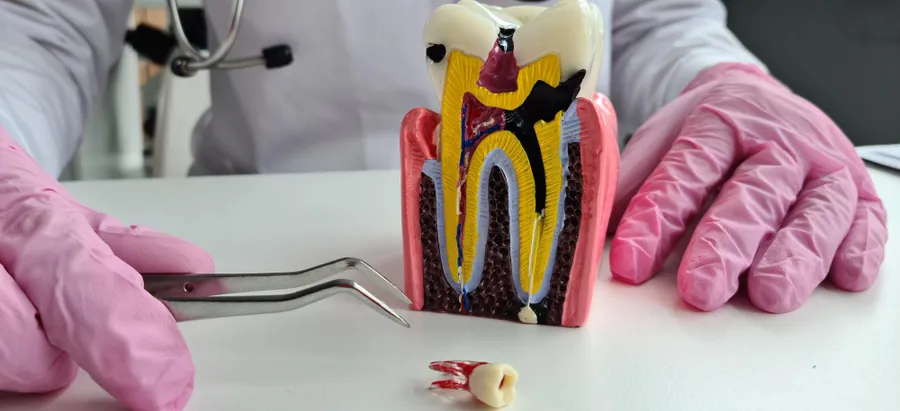
Root canal treatment, also called endodontic treatment, removes infected or inflamed tissue, called pulp, from inside a tooth. The inner canal is then cleaned, shaped, and sealed to stop the infection from spreading, which lets the tooth stay in place instead of being removed.
Signs You Might Need One
A few symptoms commonly point toward needing a root canal: lingering pain after hot or cold food or drink, pain when biting or chewing, a tooth that’s noticeably darkened, or swelling and tenderness in the gum near a specific tooth. Some infected teeth show no symptoms at all and are only caught on an X-ray, which is one reason regular check-ups matter even when nothing feels wrong.
What Happens During the Procedure
- Assessment. An X-ray confirms the diagnosis and shows the shape of the tooth’s root canal system.
- Numbing and access. The tooth is numbed, and a small opening is made to reach the inner pulp chamber.
- Cleaning. The infected or inflamed pulp is removed with fine instruments, and the canal is cleaned and shaped.
- Sealing. The canal is filled with a biocompatible material and the access opening is closed, usually with a filling for the time being.
- Restoration. A permanent filling or crown is placed once the tooth has settled, often at a follow-up visit.
A single appointment generally takes 60 to 90 minutes. Molars, which have more canals than front teeth, tend to take longer. Straightforward cases are often finished in one visit; more complex or heavily infected teeth sometimes need a second appointment a few days later.
Does It Hurt?
The procedure itself is carried out under local anaesthesia, so you shouldn’t feel pain while it’s happening, most patients describe it as similar to getting a filling. The pain that usually brings someone in for a root canal in the first place comes from the infected or inflamed pulp itself, and that’s exactly what the treatment relieves.
Recovery: What to Expect
Mild soreness or sensitivity around the treated tooth for a few days is common and generally settles on its own or with over-the-counter pain relief. Avoid chewing on that tooth until any numbness has fully worn off, and if it only has a temporary filling in place, stick to softer foods on that side until the permanent restoration is fitted. Keeping the follow-up appointment for a permanent filling or crown matters: leaving a treated tooth without proper long-term protection raises the risk of it fracturing later.
Root Canal vs. Extraction
Both resolve a severely infected tooth, but the outcome is different. Root canal treatment removes the infection while keeping your natural tooth, which then functions much like it did before, especially once protected with a crown if one’s needed. Extraction removes the tooth entirely, which resolves the infection just as effectively but leaves a gap that generally needs addressing afterward with an implant, bridge, or denture. Where a tooth can realistically be saved, root canal treatment is usually the more conservative option.
How Much Does a Root Canal Cost?
At Dentavivo, root canal treatment starts from €75 per tooth. The exact price depends on which tooth is involved, since molars with more canals generally cost more than front teeth, and whether the case needs one visit or two. Any crown recommended afterward is quoted separately. In the UK, US, and much of Western Europe, the same treatment plus crown typically costs several times that.
Getting Started
If you’re dealing with tooth pain and think it might need attention, our root canal treatment page has the full details, including how it compares if a crown ends up being recommended afterward. Share your symptoms and any existing X-rays through our contact page, and we can often see urgent, symptomatic cases quickly.
This page provides general information and does not constitute individual medical advice. Treatment suitability, plans, and costs can only be confirmed after a personal consultation and clinical examination with a qualified dentist. Individual results vary.
You Might Also Like
Bonding vs Crown: Which Is the Best to Fix a Damaged Tooth?
Chipped, cracked, or decayed tooth? Compare dental bonding and crowns to see which repair option makes more sense.

Chipped a Tooth? Here's What to Do Right Away
Immediate steps after chipping a tooth, how dentists fix it, and what it typically costs.
Swollen Gums with Braces? Here's How to Soothe and Heal Fast
Red, puffy gums with braces are common and usually temporary. Here's what causes it and how to soothe it fast.