'%3e%3cpath%20d='M923.21,488.13c-3.16-7.79-8-17.56-17.57-23.98-7.1-4.71-15.4-7.26-26.92-8.25h-.1c-10.32-.4-20.27,1.96-29.91,4.23-4.24,1-8.63,2.04-12.86,2.79-.6,.09-1.21,.19-1.82,.29-6.34,1.01-12.33,1.96-16.47-2.28-4.53-4.5-7.47-10.23-10.59-16.29-.45-.87-.9-1.74-1.35-2.61-.72-1.39-1.44-2.8-2.16-4.23-4.16-8.22-8.45-16.73-15.65-23.28-18.43-15.29-34.28-18.48-54.69-10.97-22.67,8.36-37.54,33.4-42.24,54.59-2.87,15.38-2.15,32.19,2.13,49.98l.45,1.85,7.53-1-.13-1.98c-.85-12.5-1.5-25.81,.63-39.05,.24-1.82,.61-3.79,.97-5.69,.12-.62,.23-1.23,.34-1.83,4.21-17.82,16.55-38.81,34.65-45.55,15.72-5.72,26.37-3.71,40.67,7.66,6.3,4.96,10.7,13.81,15.36,23.17,5.29,10.63,10.77,21.63,19.58,27.24,9.41,5.91,24.21,2.42,38.51-.96,10.72-2.53,21.81-5.15,29.92-3.62l.12,.02c12.7,1.61,20.97,6.61,26.03,15.76,2.9,5.15,4.68,9.37,5.58,13.21,2.52,12.29-.58,26.58-9.2,42.48-4.39,8.11-10.97,15.51-20.12,22.64-4.9,3.85-10.66,7.32-16.23,10.67-3.81,2.29-7.75,4.66-11.4,7.15-20.44,14.22-31.7,35.12-40.01,53.69l3.67,2.08c1.54-2.21,3.06-4.45,4.58-6.68,4.48-6.59,9.11-13.41,14.4-19.52,8.3-9.69,17.35-17.36,26.89-22.78,1.41-.81,4.32-2.51,6.88-4.01,1.58-.92,3.03-1.77,3.91-2.29,14.97-8.65,25.81-17.81,33.19-28.03,6.62-9.57,11.72-20.52,14.35-30.83,3.21-12.58,2.9-23.94-.94-33.77Z'/%3e%3cpath%20d='M214.5,531.7c6.65,3.39,11.75,8.22,15.29,14.51,3.54,6.29,5.32,13.7,5.32,22.22s-1.77,15.91-5.32,22.16c-3.54,6.25-8.64,11.03-15.29,14.33-6.65,3.31-14.51,4.96-23.59,4.96h-25.92v-83.27h25.92c9.08,0,16.94,1.69,23.59,5.08Zm1.02,60.69c5.65-5.69,8.48-13.68,8.48-23.95s-2.85-18.44-8.54-24.25c-5.7-5.81-13.88-8.72-24.55-8.72h-15.05v65.46h15.05c10.75,0,18.95-2.85,24.61-8.54Z'/%3e%3cpath%20d='M260.31,535.46v27.83h30.34v8.96h-30.34v28.67h33.93v8.96h-44.8v-83.38h44.8v8.96h-33.93Z'/%3e%3cpath%20d='M376.19,609.89h-10.87l-43.72-66.3v66.3h-10.87v-83.38h10.87l43.72,66.18v-66.18h10.87v83.38Z'/%3e%3cpath%20d='M445.96,526.62v8.84h-22.7v74.42h-10.87v-74.42h-22.82v-8.84h56.39Z'/%3e%3cpath%20d='M508.55,591.37h-36.32l-6.69,18.52h-11.47l30.1-82.79h12.54l29.98,82.79h-11.47l-6.69-18.52Zm-3.11-8.84l-15.05-42.05-15.05,42.05h30.1Z'/%3e%3cpath%20d='M608.66,526.62l-31.42,83.27h-12.54l-31.42-83.27h11.59l26.16,71.8,26.16-71.8h11.47Z'/%3e%3cpath%20d='M631.48,526.62v83.27h-10.87v-83.27h10.87Z'/%3e%3cpath%20d='M718.8,526.62l-31.42,83.27h-12.54l-31.42-83.27h11.59l26.16,71.8,26.16-71.8h11.47Z'/%3e%3cpath%20d='M747.35,605.29c-6.37-3.62-11.41-8.68-15.11-15.17-3.7-6.49-5.55-13.8-5.55-21.92s1.85-15.43,5.55-21.92c3.7-6.49,8.74-11.55,15.11-15.17,6.37-3.62,13.42-5.44,21.15-5.44s14.89,1.81,21.26,5.44c6.37,3.62,11.39,8.66,15.05,15.11,3.66,6.45,5.5,13.78,5.5,21.98s-1.83,15.53-5.5,21.98c-3.66,6.45-8.68,11.49-15.05,15.11-6.37,3.62-13.46,5.44-21.26,5.44s-14.77-1.81-21.15-5.44Zm36.85-8.06c4.66-2.71,8.32-6.57,10.99-11.59,2.67-5.02,4-10.83,4-17.44s-1.33-12.52-4-17.5c-2.67-4.98-6.31-8.82-10.93-11.53-4.62-2.71-9.88-4.06-15.77-4.06s-11.15,1.35-15.77,4.06c-4.62,2.71-8.26,6.55-10.93,11.53-2.67,4.98-4,10.81-4,17.5s1.33,12.42,4,17.44c2.67,5.02,6.33,8.88,10.99,11.59,4.66,2.71,9.89,4.06,15.71,4.06s11.05-1.35,15.71-4.06Z'/%3e%3c/g%3e%3c/svg%3e)
Swollen Gums with Braces? Here's How to Soothe and Heal Fast

Written by Sedef Özdemir · Content Specialist

Medically reviewed by Dr. Mine Helvacıoğlu Özkardeş, Prosthodontist
14+ years of experience in smile design, veneers, and implant-supported restorations.
Last reviewed: August 20, 2026
One of the most common issues patients face is swollen gums with braces. If you’ve noticed your gums are red, tender, or puffy, don’t panic. This is a frequent side effect, and more importantly, it’s manageable.
This guide walks you through why braces can cause gum swelling, how to identify the symptoms, and the steps you can take to treat and prevent it. Understanding the cause is the first step toward a comfortable, successful experience with your braces.
What Causes Swollen Gums with Braces
Plaque and Food Debris Buildup
Braces create small spaces where food particles and plaque can easily get trapped. When not removed thoroughly, this can irritate the gumline, leading to inflammation, redness, and swelling.
The brackets and wires on your teeth create countless new nooks and crannies where food particles and bacteria can hide. If not cleaned away effectively, this bacteria forms a sticky, colorless film called plaque, and increased plaque is one of the most common reasons for gum issues during orthodontic treatment.
When plaque accumulates along the gumline, it irritates the gum tissue and triggers an inflammatory response from your body. This condition, called gingivitis, is characterized by red, tender, and inflamed gums. Without proper care, it can progress to more serious gum disease, which is why tackling it early matters.
Your Body’s Natural Reaction to Braces
When you first get your braces, your mouth has to adjust to these new, foreign objects. The initial placement can cause some temporary gum irritation. Your gums may perceive the brackets and wires as intruders, triggering a mild inflammatory response that leads to swelling.
The purpose of braces is to move your teeth. This movement puts pressure on the teeth, the surrounding periodontal ligaments, and the bone. This process can also temporarily cause inflammation and sore gums, especially after an adjustment.
Hormonal Fluctuations
For some individuals, particularly adolescents and pregnant women, hormonal changes can make gums more sensitive and prone to swelling. These hormonal surges can exaggerate the body’s response to plaque, increasing the likelihood of gingivitis. If you’re in one of these groups, it helps to be extra diligent with your oral hygiene.
Gum Overgrowth (Hyperplasia) from Braces
Some patients experience mild gum tissue overgrowth, known as gingival hyperplasia, as a response to chronic irritation or difficulty cleaning around brackets. This can make the gums look puffy or uneven.
Tight or New Adjustments
After a tightening or new wire placement, the surrounding gum tissue can become temporarily irritated. This inflammation is part of your mouth’s natural response to movement and usually subsides within a few days.
Underlying Gum Disease
If swelling persists, it could be an early sign of gingivitis or a more advanced form of gum disease. Orthodontic appliances can make these conditions worse if oral hygiene isn’t carefully maintained.
Identifying the Symptoms of Braces Gum Swelling
Visual Signs
- Redness and puffiness: gums may look bright red or purplish, appear puffy and swollen, and lose their firm, defined edge.
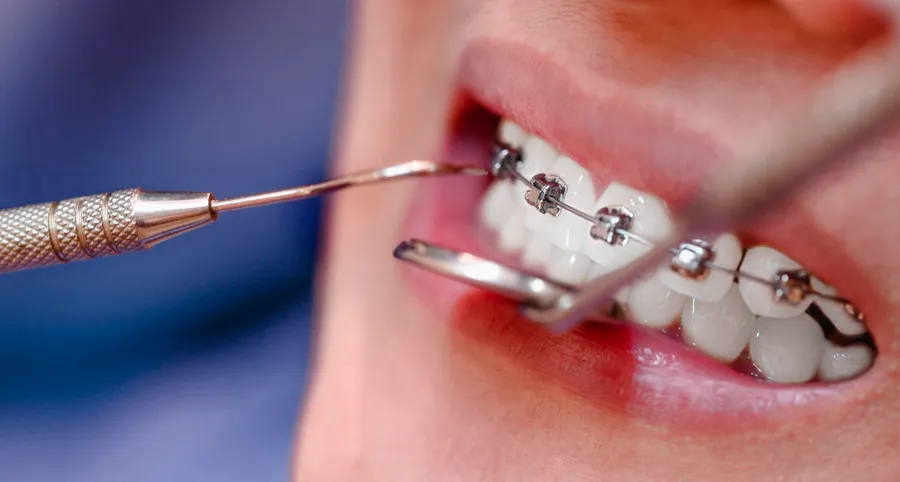
- Swelling around hardware: swelling concentrated around the brackets, where plaque is most likely to accumulate.
- Gums covering teeth: in more advanced cases, gum tissue can grow over the brackets, particularly between the teeth.
Physical Sensations and Other Symptoms
- Tenderness and pain: affected areas feel tender to the touch, with sore, aching gums.
- Bleeding: inflamed gums bleed more easily, for example on the toothbrush or when spitting after brushing or flossing. This is a classic sign of gingivitis.
- Bad breath: the bacteria causing plaque and inflammation release unpleasant odors.
How to Get Rid of Swollen Gums with Braces Fast
- Gentle brushing and flossing: use a soft-bristled toothbrush with gentle circular motions along the gumline, and floss daily with an orthodontic threader or water flosser.
- Saltwater and antiseptic rinses: rinse with warm salt water (half a teaspoon of salt in a cup of warm water) twice a day, and use an antiseptic or fluoride mouthwash recommended by your orthodontist.
- Cold compress or anti-inflammatory relief: apply a cold compress to the outside of the mouth for 10 to 15 minutes, or take an over-the-counter anti-inflammatory medication as directed.
- When medication or a dental cleaning may be needed: if swelling doesn’t improve within a week, a professional cleaning or a prescription mouth rinse may be necessary.
How to Care for Your Gums While Wearing Braces
- Hygiene routine: brush at least twice daily for two minutes, floss once daily, and angle the brush toward the gumline and around the brackets. An electric toothbrush with an orthodontic head can help.
- Foods to avoid: sticky, chewy, or hard foods such as caramel, popcorn, gum, and nuts. Softer foods like yogurt, pasta, and steamed vegetables are easier on the gums.
- Recommended tools: interdental brushes, water flossers, and orthodontic wax.
- Regular checkups: routine orthodontic visits help catch early signs of swelling.
Can Braces Cause Permanent Gum Problems?
In most cases, swollen gums with braces are temporary and fully reversible with proper care. Ignoring persistent inflammation, however, can lead to gum recession or early gum disease.
How Long Does Gum Swelling Last After a Braces Adjustment?
Gum swelling after an adjustment typically lasts three to five days. If it lasts longer than a week, it’s worth scheduling a checkup to rule out infection or trapped plaque.
When to Call Your Orthodontist
Contact your orthodontist if you experience severe pain or discomfort that isn’t relieved by over-the-counter pain relievers or salt water rinses, excessive or spontaneous bleeding, swelling so severe that gums are growing over the brackets, or signs of infection such as pus around the teeth and gums.
A healthy smile is a team effort, and staying consistent with your oral hygiene routine makes a real difference in how comfortable your treatment feels day to day. If you’re dealing with persistent gum swelling or have other concerns about your orthodontic treatment, reach out to Dentavivo to schedule a consultation, and our team can take a look at your specific situation together with you.
This page provides general information and does not constitute individual medical advice. Treatment suitability, plans, and costs can only be confirmed after a personal consultation and clinical examination with a qualified dentist. Individual results vary.
More on Oral Care

Brighten Your Smile: Top 10 Foods That Whiten Teeth
Ten everyday foods that can help keep your smile brighter, from strawberries to water.

Does Coffee Stain Your Teeth More Than Tea?
The science behind coffee and tea stains, and practical ways to reduce them.
How to Remove Stains from Teeth: A Complete Guide for a Brighter Smile
A practical guide to what causes tooth stains, what the colors mean, and how to treat and prevent them.