'%3e%3cpath%20d='M923.21,488.13c-3.16-7.79-8-17.56-17.57-23.98-7.1-4.71-15.4-7.26-26.92-8.25h-.1c-10.32-.4-20.27,1.96-29.91,4.23-4.24,1-8.63,2.04-12.86,2.79-.6,.09-1.21,.19-1.82,.29-6.34,1.01-12.33,1.96-16.47-2.28-4.53-4.5-7.47-10.23-10.59-16.29-.45-.87-.9-1.74-1.35-2.61-.72-1.39-1.44-2.8-2.16-4.23-4.16-8.22-8.45-16.73-15.65-23.28-18.43-15.29-34.28-18.48-54.69-10.97-22.67,8.36-37.54,33.4-42.24,54.59-2.87,15.38-2.15,32.19,2.13,49.98l.45,1.85,7.53-1-.13-1.98c-.85-12.5-1.5-25.81,.63-39.05,.24-1.82,.61-3.79,.97-5.69,.12-.62,.23-1.23,.34-1.83,4.21-17.82,16.55-38.81,34.65-45.55,15.72-5.72,26.37-3.71,40.67,7.66,6.3,4.96,10.7,13.81,15.36,23.17,5.29,10.63,10.77,21.63,19.58,27.24,9.41,5.91,24.21,2.42,38.51-.96,10.72-2.53,21.81-5.15,29.92-3.62l.12,.02c12.7,1.61,20.97,6.61,26.03,15.76,2.9,5.15,4.68,9.37,5.58,13.21,2.52,12.29-.58,26.58-9.2,42.48-4.39,8.11-10.97,15.51-20.12,22.64-4.9,3.85-10.66,7.32-16.23,10.67-3.81,2.29-7.75,4.66-11.4,7.15-20.44,14.22-31.7,35.12-40.01,53.69l3.67,2.08c1.54-2.21,3.06-4.45,4.58-6.68,4.48-6.59,9.11-13.41,14.4-19.52,8.3-9.69,17.35-17.36,26.89-22.78,1.41-.81,4.32-2.51,6.88-4.01,1.58-.92,3.03-1.77,3.91-2.29,14.97-8.65,25.81-17.81,33.19-28.03,6.62-9.57,11.72-20.52,14.35-30.83,3.21-12.58,2.9-23.94-.94-33.77Z'/%3e%3cpath%20d='M214.5,531.7c6.65,3.39,11.75,8.22,15.29,14.51,3.54,6.29,5.32,13.7,5.32,22.22s-1.77,15.91-5.32,22.16c-3.54,6.25-8.64,11.03-15.29,14.33-6.65,3.31-14.51,4.96-23.59,4.96h-25.92v-83.27h25.92c9.08,0,16.94,1.69,23.59,5.08Zm1.02,60.69c5.65-5.69,8.48-13.68,8.48-23.95s-2.85-18.44-8.54-24.25c-5.7-5.81-13.88-8.72-24.55-8.72h-15.05v65.46h15.05c10.75,0,18.95-2.85,24.61-8.54Z'/%3e%3cpath%20d='M260.31,535.46v27.83h30.34v8.96h-30.34v28.67h33.93v8.96h-44.8v-83.38h44.8v8.96h-33.93Z'/%3e%3cpath%20d='M376.19,609.89h-10.87l-43.72-66.3v66.3h-10.87v-83.38h10.87l43.72,66.18v-66.18h10.87v83.38Z'/%3e%3cpath%20d='M445.96,526.62v8.84h-22.7v74.42h-10.87v-74.42h-22.82v-8.84h56.39Z'/%3e%3cpath%20d='M508.55,591.37h-36.32l-6.69,18.52h-11.47l30.1-82.79h12.54l29.98,82.79h-11.47l-6.69-18.52Zm-3.11-8.84l-15.05-42.05-15.05,42.05h30.1Z'/%3e%3cpath%20d='M608.66,526.62l-31.42,83.27h-12.54l-31.42-83.27h11.59l26.16,71.8,26.16-71.8h11.47Z'/%3e%3cpath%20d='M631.48,526.62v83.27h-10.87v-83.27h10.87Z'/%3e%3cpath%20d='M718.8,526.62l-31.42,83.27h-12.54l-31.42-83.27h11.59l26.16,71.8,26.16-71.8h11.47Z'/%3e%3cpath%20d='M747.35,605.29c-6.37-3.62-11.41-8.68-15.11-15.17-3.7-6.49-5.55-13.8-5.55-21.92s1.85-15.43,5.55-21.92c3.7-6.49,8.74-11.55,15.11-15.17,6.37-3.62,13.42-5.44,21.15-5.44s14.89,1.81,21.26,5.44c6.37,3.62,11.39,8.66,15.05,15.11,3.66,6.45,5.5,13.78,5.5,21.98s-1.83,15.53-5.5,21.98c-3.66,6.45-8.68,11.49-15.05,15.11-6.37,3.62-13.46,5.44-21.26,5.44s-14.77-1.81-21.15-5.44Zm36.85-8.06c4.66-2.71,8.32-6.57,10.99-11.59,2.67-5.02,4-10.83,4-17.44s-1.33-12.52-4-17.5c-2.67-4.98-6.31-8.82-10.93-11.53-4.62-2.71-9.88-4.06-15.77-4.06s-11.15,1.35-15.77,4.06c-4.62,2.71-8.26,6.55-10.93,11.53-2.67,4.98-4,10.81-4,17.5s1.33,12.42,4,17.44c2.67,5.02,6.33,8.88,10.99,11.59,4.66,2.71,9.89,4.06,15.71,4.06s11.05-1.35,15.71-4.06Z'/%3e%3c/g%3e%3c/svg%3e)
How to Remove Stains from Teeth: A Complete Guide for a Brighter Smile

Written by Sedef Özdemir · Content Specialist

Medically reviewed by Dr. Mine Helvacıoğlu Özkardeş, Prosthodontist
14+ years of experience in smile design, veneers, and implant-supported restorations.
Last reviewed: October 23, 2026
A smile is often the first thing people notice about someone, and studies suggest that more than 80% of adults notice a person’s smile first, while as many as one in four people avoid smiling because they’re self-conscious about the color of their teeth. Fortunately, most tooth discoloration can be treated or noticeably improved, whether through at-home care or a dentist’s help.
What Is Tooth Discoloration?
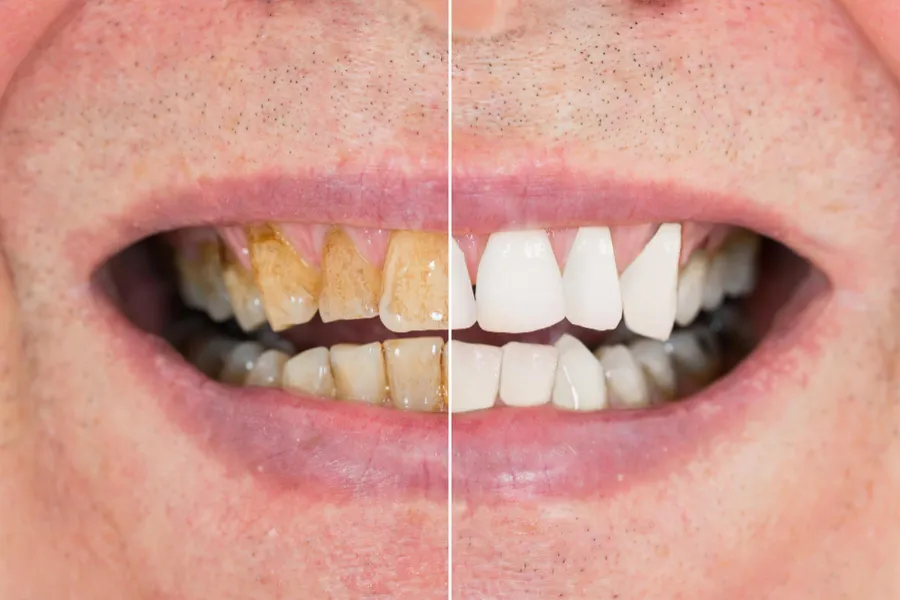
Tooth discoloration is any change in the natural white color of the teeth. A small amount of shade change is a normal part of aging, but noticeable yellowing, browning, or grayish tones usually come from a combination of external habits and internal factors.
Types of Tooth Stains
Extrinsic Stains
Extrinsic stains sit on the surface of the enamel and are usually caused by coffee, smoking, or brightly colored foods and drinks. These stains generally respond well to whitening toothpaste or a professional cleaning.
Intrinsic Stains
Intrinsic stains originate inside the tooth itself, often due to trauma, certain medications, or excessive fluoride exposure. These stains are harder to treat and usually call for more advanced professional procedures or cosmetic solutions such as veneers.
What Causes Tooth Stains?
- Coffee: its pigments and acidity can gradually darken enamel
- Smoking: tar and nicotine leave stubborn surface stains
- Dark foods and beverages: chromogens in red wine, berries, and soy sauce can discolor teeth over time
- Poor oral hygiene: plaque and tartar trap pigments against the tooth surface
- Aging: enamel naturally thins over time, revealing the yellowish dentin underneath
- Excessive fluoride: can cause fluorosis, which appears as white or brown streaks
- Genetics: some people are simply born with thinner or more porous enamel
- Dental trauma: can lead to gray or brown intrinsic discoloration
- Certain medications: including tetracycline, some antihistamines, and blood pressure medications
- Cancer treatments: radiation and chemotherapy can also affect tooth color
What Different Stain Colors Can Mean
- Yellow: typically extrinsic and responds well to whitening
- Brown: often linked to long-term tobacco or beverage use
- Purple-tinted: usually from dark red wine or berries, and tends to fade with removal techniques
- Gray: usually intrinsic, linked to trauma or medication, and often needs veneers or crowns
- White spots: can indicate fluorosis or early demineralization, which may respond to microabrasion
- Black: may point to decay, tartar buildup, or old metal fillings, and is worth having a dentist check
At-Home Stain Removal
- Keep up strong oral hygiene: brush twice a day with fluoride toothpaste and floss daily
- Baking soda can act as a gentle abrasive when used in moderation
- Citric acid from lemon or orange peel can temporarily brighten teeth but may weaken enamel with long-term use
- Activated charcoal should be used sparingly, if at all
- Choose a toothpaste designed for stain removal
- Limit staining foods and drinks, avoid smoking, and rinse your mouth after consuming anything strongly pigmented
Professional Treatments
- Teeth whitening: an in-office treatment using hydrogen peroxide
- Dental bonding: tooth-colored resin applied to treat minor to moderate intrinsic stains
- Porcelain veneers: a longer-term solution for deep or widespread discoloration
- Dental crowns: used when the entire tooth needs to be encased and restored
Preventing Future Stains
- Brush and floss regularly with fluoride toothpaste
- Limit staining foods and drinks, and rinse your mouth afterward
- Quit smoking
- Keep up with regular professional cleanings
- Drink plenty of water
- Use a straw for dark beverages
- Consider switching to preventive dental products
If stains have built up over time or you’d like advice on the best option for your teeth, reach out to Dentavivo to arrange a consultation. We can help you figure out the right approach for your situation.
This page provides general information and does not constitute individual medical advice. Treatment suitability, plans, and costs can only be confirmed after a personal consultation and clinical examination with a qualified dentist. Individual results vary.
More on Oral Care
Swollen Gums with Braces? Here's How to Soothe and Heal Fast
Red, puffy gums with braces are common and usually temporary. Here's what causes it and how to soothe it fast.
Brighten Your Smile: Top 10 Foods That Whiten Teeth
Ten everyday foods that can help keep your smile brighter, from strawberries to water.

Does Coffee Stain Your Teeth More Than Tea?
The science behind coffee and tea stains, and practical ways to reduce them.