'%3e%3cpath%20d='M923.21,488.13c-3.16-7.79-8-17.56-17.57-23.98-7.1-4.71-15.4-7.26-26.92-8.25h-.1c-10.32-.4-20.27,1.96-29.91,4.23-4.24,1-8.63,2.04-12.86,2.79-.6,.09-1.21,.19-1.82,.29-6.34,1.01-12.33,1.96-16.47-2.28-4.53-4.5-7.47-10.23-10.59-16.29-.45-.87-.9-1.74-1.35-2.61-.72-1.39-1.44-2.8-2.16-4.23-4.16-8.22-8.45-16.73-15.65-23.28-18.43-15.29-34.28-18.48-54.69-10.97-22.67,8.36-37.54,33.4-42.24,54.59-2.87,15.38-2.15,32.19,2.13,49.98l.45,1.85,7.53-1-.13-1.98c-.85-12.5-1.5-25.81,.63-39.05,.24-1.82,.61-3.79,.97-5.69,.12-.62,.23-1.23,.34-1.83,4.21-17.82,16.55-38.81,34.65-45.55,15.72-5.72,26.37-3.71,40.67,7.66,6.3,4.96,10.7,13.81,15.36,23.17,5.29,10.63,10.77,21.63,19.58,27.24,9.41,5.91,24.21,2.42,38.51-.96,10.72-2.53,21.81-5.15,29.92-3.62l.12,.02c12.7,1.61,20.97,6.61,26.03,15.76,2.9,5.15,4.68,9.37,5.58,13.21,2.52,12.29-.58,26.58-9.2,42.48-4.39,8.11-10.97,15.51-20.12,22.64-4.9,3.85-10.66,7.32-16.23,10.67-3.81,2.29-7.75,4.66-11.4,7.15-20.44,14.22-31.7,35.12-40.01,53.69l3.67,2.08c1.54-2.21,3.06-4.45,4.58-6.68,4.48-6.59,9.11-13.41,14.4-19.52,8.3-9.69,17.35-17.36,26.89-22.78,1.41-.81,4.32-2.51,6.88-4.01,1.58-.92,3.03-1.77,3.91-2.29,14.97-8.65,25.81-17.81,33.19-28.03,6.62-9.57,11.72-20.52,14.35-30.83,3.21-12.58,2.9-23.94-.94-33.77Z'/%3e%3cpath%20d='M214.5,531.7c6.65,3.39,11.75,8.22,15.29,14.51,3.54,6.29,5.32,13.7,5.32,22.22s-1.77,15.91-5.32,22.16c-3.54,6.25-8.64,11.03-15.29,14.33-6.65,3.31-14.51,4.96-23.59,4.96h-25.92v-83.27h25.92c9.08,0,16.94,1.69,23.59,5.08Zm1.02,60.69c5.65-5.69,8.48-13.68,8.48-23.95s-2.85-18.44-8.54-24.25c-5.7-5.81-13.88-8.72-24.55-8.72h-15.05v65.46h15.05c10.75,0,18.95-2.85,24.61-8.54Z'/%3e%3cpath%20d='M260.31,535.46v27.83h30.34v8.96h-30.34v28.67h33.93v8.96h-44.8v-83.38h44.8v8.96h-33.93Z'/%3e%3cpath%20d='M376.19,609.89h-10.87l-43.72-66.3v66.3h-10.87v-83.38h10.87l43.72,66.18v-66.18h10.87v83.38Z'/%3e%3cpath%20d='M445.96,526.62v8.84h-22.7v74.42h-10.87v-74.42h-22.82v-8.84h56.39Z'/%3e%3cpath%20d='M508.55,591.37h-36.32l-6.69,18.52h-11.47l30.1-82.79h12.54l29.98,82.79h-11.47l-6.69-18.52Zm-3.11-8.84l-15.05-42.05-15.05,42.05h30.1Z'/%3e%3cpath%20d='M608.66,526.62l-31.42,83.27h-12.54l-31.42-83.27h11.59l26.16,71.8,26.16-71.8h11.47Z'/%3e%3cpath%20d='M631.48,526.62v83.27h-10.87v-83.27h10.87Z'/%3e%3cpath%20d='M718.8,526.62l-31.42,83.27h-12.54l-31.42-83.27h11.59l26.16,71.8,26.16-71.8h11.47Z'/%3e%3cpath%20d='M747.35,605.29c-6.37-3.62-11.41-8.68-15.11-15.17-3.7-6.49-5.55-13.8-5.55-21.92s1.85-15.43,5.55-21.92c3.7-6.49,8.74-11.55,15.11-15.17,6.37-3.62,13.42-5.44,21.15-5.44s14.89,1.81,21.26,5.44c6.37,3.62,11.39,8.66,15.05,15.11,3.66,6.45,5.5,13.78,5.5,21.98s-1.83,15.53-5.5,21.98c-3.66,6.45-8.68,11.49-15.05,15.11-6.37,3.62-13.46,5.44-21.26,5.44s-14.77-1.81-21.15-5.44Zm36.85-8.06c4.66-2.71,8.32-6.57,10.99-11.59,2.67-5.02,4-10.83,4-17.44s-1.33-12.52-4-17.5c-2.67-4.98-6.31-8.82-10.93-11.53-4.62-2.71-9.88-4.06-15.77-4.06s-11.15,1.35-15.77,4.06c-4.62,2.71-8.26,6.55-10.93,11.53-2.67,4.98-4,10.81-4,17.5s1.33,12.42,4,17.44c2.67,5.02,6.33,8.88,10.99,11.59,4.66,2.71,9.89,4.06,15.71,4.06s11.05-1.35,15.71-4.06Z'/%3e%3c/g%3e%3c/svg%3e)
Teeth Cleaning: Types, Cost and How Often You Actually Need One
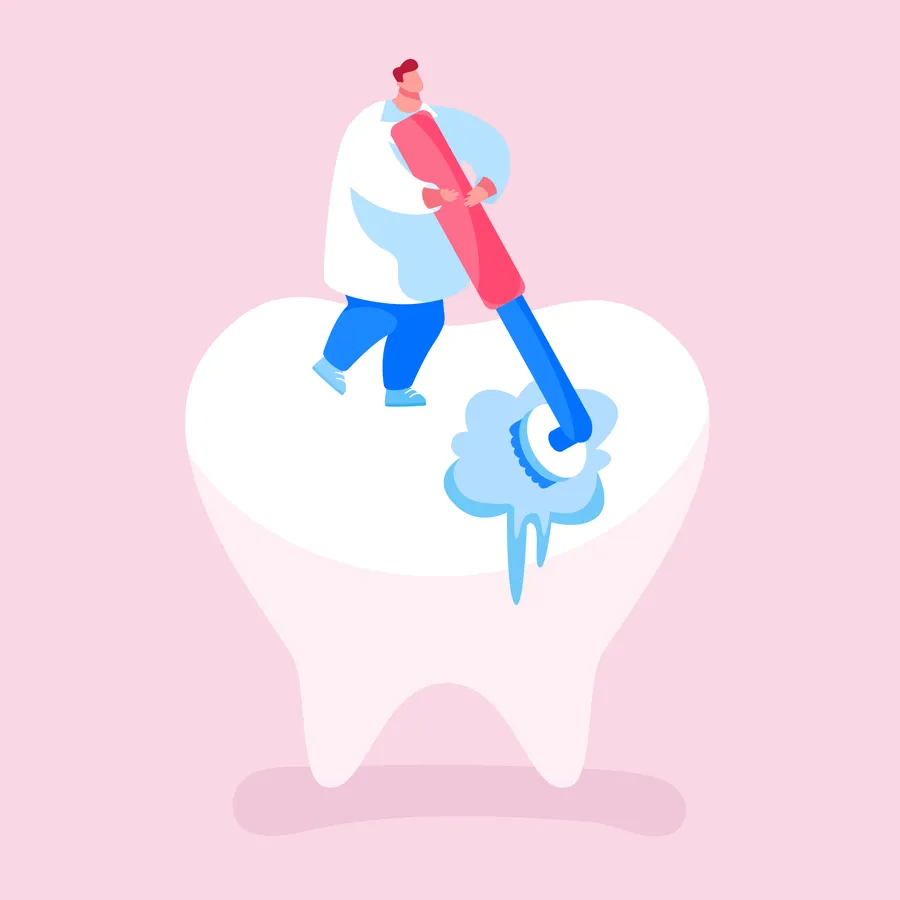

Written by Sedef Özdemir · Content Specialist

Medically reviewed by Dr. Mine Helvacıoğlu Özkardeş, Prosthodontist
14+ years of experience in smile design, veneers, and implant-supported restorations.
Last reviewed: October 23, 2026
Brushing and flossing handle most of the day-to-day work, but they can’t remove tartar that’s already hardened onto the tooth, especially along and below the gumline. That’s what a professional cleaning is for. Here’s what actually happens at an appointment, how a regular cleaning differs from a deep one, and how often you genuinely need to go.
What Happens During a Professional Teeth Cleaning?
A hygienist or dentist uses specialized instruments to remove plaque and tartar buildup, including in spots a toothbrush can’t fully reach, then polishes the tooth surface to smooth it and reduce surface staining. A standard cleaning takes about 30 to 45 minutes, a little longer if there’s significant buildup or it’s your first cleaning in a while.
Regular Cleaning vs. Deep Cleaning
These aren’t the same appointment, and mixing them up is a common source of confusion:
- Regular cleaning. Addresses plaque and tartar above and right at the gumline. This is the standard, routine appointment for patients with generally healthy gums.
- Deep cleaning (scaling and root planing). Goes further below the gumline, targeting bacteria and tartar in the pockets that form when gum disease has caused the gums to pull away from the teeth. It’s a more involved procedure, sometimes done in stages, and is recommended based on what your dentist finds during examination, not requested on demand.
Signs You Might Need a Deep Cleaning
A regular cleaning is usually enough if your gums are healthy. A few signs point toward needing something more thorough instead: gums that bleed easily when you brush or floss, persistent bad breath, gums that look red or swollen rather than pink and firm, or teeth that feel loose. Your dentist can measure gum pocket depth during an exam to confirm whether a deep clean is actually needed.
How Much Does Teeth Cleaning Cost?
At Dentavivo, a cleaning starts from €50. The exact price depends on how much plaque and tartar buildup is present and whether a deep cleaning is recommended instead of a standard one. It’s often combined with your first consultation, since starting any other treatment, veneers, crowns, or implants, on a clean, healthy mouth reduces the risk of complications later.
How Often Should You Get Your Teeth Cleaned?
Every six months is the common general guideline, but it’s not a fixed rule for everyone. Your dentist may recommend more frequent cleanings if you build up tartar quickly, have gum disease, or wear braces, and less often if your oral hygiene and gum health are consistently strong. It’s worth asking at your next visit what interval actually makes sense for you rather than defaulting to the standard advice.
What to Expect at Your Appointment
- Exam. A quick check of your teeth and gums, sometimes with an X-ray if it’s been a while since your last one.
- Scaling. Plaque and tartar are removed with hand instruments or an ultrasonic tool.
- Polishing. The tooth surface is smoothed and surface stains are reduced.
- Advice. Your dentist flags anything worth watching, and confirms when to book your next visit.
You can generally eat as soon as you leave. If you’ve had a deep clean or your gums feel more sensitive than usual, softer foods for the rest of the day tend to be more comfortable.
Getting Started
If you’re also looking into other treatment and wondering how it fits with a cleaning, our page on teeth cleaning at Dentavivo covers the full details, and our post on what causes receding gums is worth a read if gum health is part of what’s bringing you in. Share your details through our contact page for a free, personalized quote.
This page provides general information and does not constitute individual medical advice. Treatment suitability, plans, and costs can only be confirmed after a personal consultation and clinical examination with a qualified dentist. Individual results vary.
More on Oral Care
Swollen Gums with Braces? Here's How to Soothe and Heal Fast
Red, puffy gums with braces are common and usually temporary. Here's what causes it and how to soothe it fast.
Brighten Your Smile: Top 10 Foods That Whiten Teeth
Ten everyday foods that can help keep your smile brighter, from strawberries to water.

Does Coffee Stain Your Teeth More Than Tea?
The science behind coffee and tea stains, and practical ways to reduce them.