'%3e%3cpath%20d='M923.21,488.13c-3.16-7.79-8-17.56-17.57-23.98-7.1-4.71-15.4-7.26-26.92-8.25h-.1c-10.32-.4-20.27,1.96-29.91,4.23-4.24,1-8.63,2.04-12.86,2.79-.6,.09-1.21,.19-1.82,.29-6.34,1.01-12.33,1.96-16.47-2.28-4.53-4.5-7.47-10.23-10.59-16.29-.45-.87-.9-1.74-1.35-2.61-.72-1.39-1.44-2.8-2.16-4.23-4.16-8.22-8.45-16.73-15.65-23.28-18.43-15.29-34.28-18.48-54.69-10.97-22.67,8.36-37.54,33.4-42.24,54.59-2.87,15.38-2.15,32.19,2.13,49.98l.45,1.85,7.53-1-.13-1.98c-.85-12.5-1.5-25.81,.63-39.05,.24-1.82,.61-3.79,.97-5.69,.12-.62,.23-1.23,.34-1.83,4.21-17.82,16.55-38.81,34.65-45.55,15.72-5.72,26.37-3.71,40.67,7.66,6.3,4.96,10.7,13.81,15.36,23.17,5.29,10.63,10.77,21.63,19.58,27.24,9.41,5.91,24.21,2.42,38.51-.96,10.72-2.53,21.81-5.15,29.92-3.62l.12,.02c12.7,1.61,20.97,6.61,26.03,15.76,2.9,5.15,4.68,9.37,5.58,13.21,2.52,12.29-.58,26.58-9.2,42.48-4.39,8.11-10.97,15.51-20.12,22.64-4.9,3.85-10.66,7.32-16.23,10.67-3.81,2.29-7.75,4.66-11.4,7.15-20.44,14.22-31.7,35.12-40.01,53.69l3.67,2.08c1.54-2.21,3.06-4.45,4.58-6.68,4.48-6.59,9.11-13.41,14.4-19.52,8.3-9.69,17.35-17.36,26.89-22.78,1.41-.81,4.32-2.51,6.88-4.01,1.58-.92,3.03-1.77,3.91-2.29,14.97-8.65,25.81-17.81,33.19-28.03,6.62-9.57,11.72-20.52,14.35-30.83,3.21-12.58,2.9-23.94-.94-33.77Z'/%3e%3cpath%20d='M214.5,531.7c6.65,3.39,11.75,8.22,15.29,14.51,3.54,6.29,5.32,13.7,5.32,22.22s-1.77,15.91-5.32,22.16c-3.54,6.25-8.64,11.03-15.29,14.33-6.65,3.31-14.51,4.96-23.59,4.96h-25.92v-83.27h25.92c9.08,0,16.94,1.69,23.59,5.08Zm1.02,60.69c5.65-5.69,8.48-13.68,8.48-23.95s-2.85-18.44-8.54-24.25c-5.7-5.81-13.88-8.72-24.55-8.72h-15.05v65.46h15.05c10.75,0,18.95-2.85,24.61-8.54Z'/%3e%3cpath%20d='M260.31,535.46v27.83h30.34v8.96h-30.34v28.67h33.93v8.96h-44.8v-83.38h44.8v8.96h-33.93Z'/%3e%3cpath%20d='M376.19,609.89h-10.87l-43.72-66.3v66.3h-10.87v-83.38h10.87l43.72,66.18v-66.18h10.87v83.38Z'/%3e%3cpath%20d='M445.96,526.62v8.84h-22.7v74.42h-10.87v-74.42h-22.82v-8.84h56.39Z'/%3e%3cpath%20d='M508.55,591.37h-36.32l-6.69,18.52h-11.47l30.1-82.79h12.54l29.98,82.79h-11.47l-6.69-18.52Zm-3.11-8.84l-15.05-42.05-15.05,42.05h30.1Z'/%3e%3cpath%20d='M608.66,526.62l-31.42,83.27h-12.54l-31.42-83.27h11.59l26.16,71.8,26.16-71.8h11.47Z'/%3e%3cpath%20d='M631.48,526.62v83.27h-10.87v-83.27h10.87Z'/%3e%3cpath%20d='M718.8,526.62l-31.42,83.27h-12.54l-31.42-83.27h11.59l26.16,71.8,26.16-71.8h11.47Z'/%3e%3cpath%20d='M747.35,605.29c-6.37-3.62-11.41-8.68-15.11-15.17-3.7-6.49-5.55-13.8-5.55-21.92s1.85-15.43,5.55-21.92c3.7-6.49,8.74-11.55,15.11-15.17,6.37-3.62,13.42-5.44,21.15-5.44s14.89,1.81,21.26,5.44c6.37,3.62,11.39,8.66,15.05,15.11,3.66,6.45,5.5,13.78,5.5,21.98s-1.83,15.53-5.5,21.98c-3.66,6.45-8.68,11.49-15.05,15.11-6.37,3.62-13.46,5.44-21.26,5.44s-14.77-1.81-21.15-5.44Zm36.85-8.06c4.66-2.71,8.32-6.57,10.99-11.59,2.67-5.02,4-10.83,4-17.44s-1.33-12.52-4-17.5c-2.67-4.98-6.31-8.82-10.93-11.53-4.62-2.71-9.88-4.06-15.77-4.06s-11.15,1.35-15.77,4.06c-4.62,2.71-8.26,6.55-10.93,11.53-2.67,4.98-4,10.81-4,17.5s1.33,12.42,4,17.44c2.67,5.02,6.33,8.88,10.99,11.59,4.66,2.71,9.89,4.06,15.71,4.06s11.05-1.35,15.71-4.06Z'/%3e%3c/g%3e%3c/svg%3e)
Receding Gums: Why It Happens and What Actually Helps

Written by Sedef Özdemir · Content Specialist

Medically reviewed by Dr. Mine Helvacıoğlu Özkardeş, Prosthodontist
14+ years of experience in smile design, veneers, and implant-supported restorations.
Last reviewed: October 23, 2026
Noticing that your teeth look a little longer than they used to, or that a tooth near the gumline has started to feel sensitive, is one of the more common reasons people start searching for answers about their gums. Gum recession is gradual, which is part of why it often goes unnoticed until it is fairly visible. Here is what actually causes it, and what helps.
What Does Gum Recession Look Like?
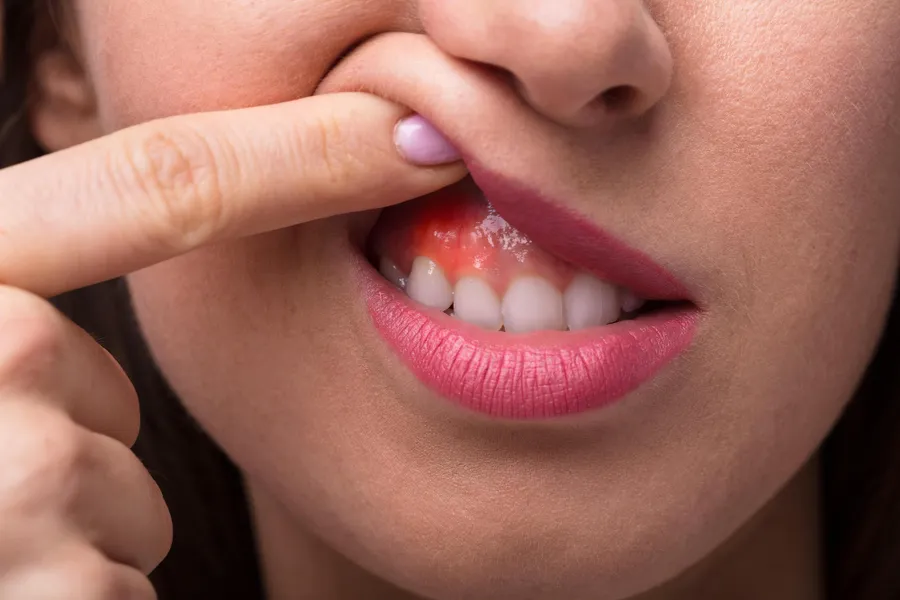
Gum recession is when the gum tissue surrounding a tooth pulls back, exposing more of the tooth, and sometimes the root, than is normally visible. Signs include:
- Teeth that look longer than they used to.
- A visible notch or gap near the gumline.
- Increased sensitivity to hot, cold, or sweet food and drink.
- The root surface feeling rougher than the enamel above it.
- In more advanced cases, slight looseness of the affected tooth.
It usually develops slowly over months or years, and it is common for one or two teeth to be affected before others, rather than the whole mouth changing at once.
Why Are My Gums Receding?
Several factors can cause or speed up gum recession, often in combination:
- Gum disease (periodontal disease): the most common underlying cause. Bacterial plaque buildup below the gumline triggers inflammation that gradually breaks down the gum tissue and the bone that supports it.
- Brushing too hard: using a hard-bristled brush or heavy pressure over years wears away gum tissue, especially along the outer surfaces of the teeth.
- Genetics: some people are simply born with thinner or less gum tissue in certain areas, making them more prone to recession even with good habits.
- Teeth grinding or clenching: excess force on the teeth can put strain on the surrounding gum and bone.
- Tobacco use: smoking and other tobacco products are linked to a higher rate of gum disease and slower healing.
- Misaligned teeth or a poor bite: teeth that sit outside the normal dental arch can have thinner gum coverage to begin with.
- Hormonal changes: pregnancy, puberty, and menopause can all make gum tissue more sensitive to plaque and more prone to recession.
- Piercings or friction: lip or tongue piercings, and even poorly fitted dentures or retainers, can rub against the gum over time.
Can Receding Gums Grow Back?
No, not on their own. Gum tissue does not regenerate the way skin does, so once it has receded, it stays that way unless it is treated. This is one of the more persistent myths around gum health: there is no toothpaste, mouthwash, or home remedy that regrows lost gum tissue. What home care and professional treatment can do is stop the recession from getting worse, and in some cases a dentist can restore coverage over the exposed root through a targeted procedure.
How to Stop Receding Gums From Getting Worse
- Switch to a soft-bristled brush and use gentle, circular motions rather than aggressive back-and-forth scrubbing.
- Have your brushing technique checked at your next cleaning. Many people are surprised to learn they have been brushing too hard for years.
- Keep up with professional cleanings, since removing plaque and tartar below the gumline is something a toothbrush cannot fully do on its own.
- Address teeth grinding, often with a night guard, if that is a contributing factor.
- Quit or cut back on tobacco, which is one of the most controllable risk factors.
- Floss daily, gently, rather than skipping it because it feels uncomfortable near sensitive areas.
What Treatment Options Actually Help?
Treatment depends on how much recession has occurred and whether active gum disease is driving it.
- Scaling and root planing: a deep cleaning that removes plaque and tartar from below the gumline and smooths the root surface, often the first step when gum disease is the underlying cause. Regular professional cleaning is part of keeping results stable afterward.
- Bite adjustment or a night guard: if grinding or an uneven bite is contributing, correcting that can slow or stop further recession.
- Gum graft surgery: for more significant recession, a periodontist can graft tissue over the exposed root to restore coverage, reduce sensitivity, and protect the root from further wear. This is a specialist procedure, and whether it is appropriate depends on an in-person exam.
- Desensitizing treatments: for cases where sensitivity is the main complaint and the recession itself is mild and stable, a dentist may recommend a desensitizing agent or a protective coating rather than surgery.
When to See a Dentist About Receding Gums
Book an appointment if you notice increasing sensitivity, a visibly longer-looking tooth, bleeding when you brush or floss, or any looseness in a tooth. Catching gum recession early generally means simpler, less invasive treatment, while waiting tends to narrow the options down to more involved ones. An exam and, if needed, some X-rays are the only reliable way to know how much recession has occurred and what is driving it in your specific case.
If you are noticing signs of gum recession and would like an honest assessment of what is going on, reach out to Dentavivo and we can talk through next steps.
This page provides general information and does not constitute individual medical advice. Treatment suitability, plans, and costs can only be confirmed after a personal consultation and clinical examination with a qualified dentist. Individual results vary.
More on Oral Care
Swollen Gums with Braces? Here's How to Soothe and Heal Fast
Red, puffy gums with braces are common and usually temporary. Here's what causes it and how to soothe it fast.

Brighten Your Smile: Top 10 Foods That Whiten Teeth
Ten everyday foods that can help keep your smile brighter, from strawberries to water.

Does Coffee Stain Your Teeth More Than Tea?
The science behind coffee and tea stains, and practical ways to reduce them.