
Mouth Guards for Teeth Grinding: Do You Need One?

Written by Sedef Özdemir · Content Specialist

Medically reviewed by Dr. Mine Helvacıoğlu Özkardeş, Prosthodontist
14+ years of experience in smile design, veneers, and implant-supported restorations.
Last reviewed: October 23, 2026
Waking up with a sore jaw, a dull headache, or teeth that suddenly feel more sensitive are classic signs of grinding your teeth at night, often without ever realising you’re doing it. A mouth guard is the simplest way to protect your teeth from the damage, and for many people it’s the only treatment needed. Here’s how they work and whether you actually need one.
What Is Teeth Grinding (Bruxism)?
Bruxism is the medical term for clenching or grinding your teeth, either during sleep (sleep bruxism) or while awake (awake bruxism, often linked to stress or concentration). It’s more common than most people realise: global estimates put combined sleep and awake bruxism at over one in five adults, though a lot of cases go unnoticed simply because they happen during sleep.
Signs You Might Be Grinding Your Teeth
- Waking up with a sore or tight jaw, or a dull headache around the temples
- A partner mentioning they hear grinding or clicking sounds at night
- Teeth that look flattened, chipped, or increasingly sensitive
- Unexplained wear on veneers, crowns, or fillings
- Indentations on the inside of your cheeks or along the edge of your tongue
Why a Mouth Guard Helps
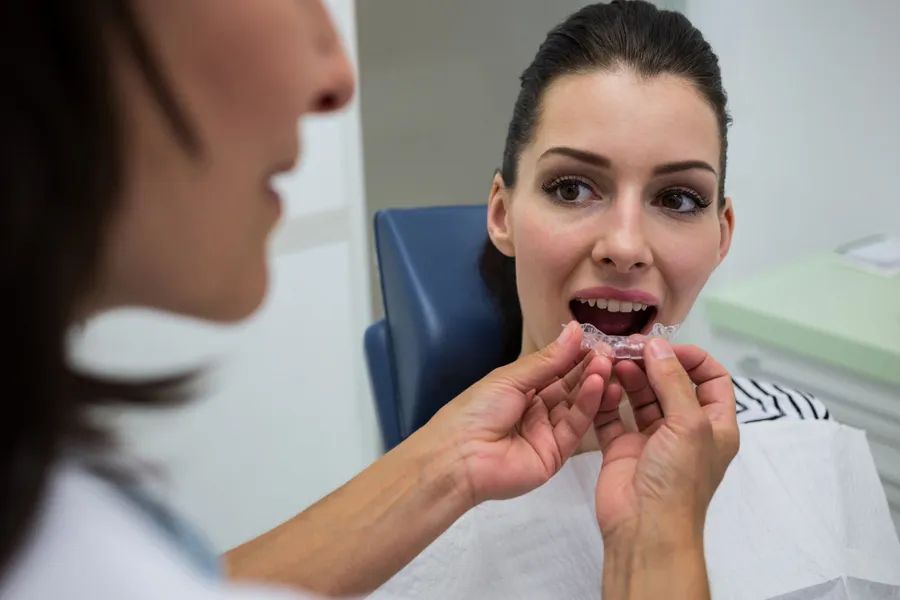
A mouth guard, also called a night guard or occlusal splint, fits over your teeth and creates a cushioned barrier so your upper and lower teeth can’t grind directly against each other. It doesn’t stop the underlying clenching, but it absorbs the force, which protects your enamel, your jaw joint, and any existing dental work from wear that builds up gradually over months and years. If you’ve invested in veneers or crowns, a night guard is one of the simplest ways to protect that investment, since grinding is one of the main reasons restorations wear out faster than expected.
Types of Mouth Guards
- Custom-fitted (dentist-made): Made from a mould of your own teeth, these offer the best fit, comfort, and durability, and are adjusted to your specific bite. They cost more upfront but typically last several years.
- Boil-and-bite: Sold over the counter, softened in hot water, and bitten into shape at home. A reasonable budget option, though the fit is never as precise as a custom guard.
- Stock (ready-made): The cheapest and least precise option, sized generically rather than to your mouth. Fine for occasional, short-term use, but not a long-term solution.
How to Care for Your Night Guard
Rinse it with cool water after every use, and clean it gently with a soft toothbrush (skip the toothpaste, which can scratch the surface). Store it in its ventilated case rather than wrapped in a tissue or loose in a bag, and have it checked at your regular dental visits, since a worn-out guard stops protecting your teeth even if it still feels fine to wear.
When to See a Dentist
If you suspect you’re grinding your teeth, especially if you’re noticing jaw pain, headaches, or visible wear, it’s worth getting your bite checked rather than picking up an over-the-counter guard and hoping for the best. A dentist can confirm whether grinding is actually the cause, rule out other contributing factors like gum recession from an uneven bite, and fit a custom guard that matches your teeth properly.
Getting Started
If you think you might be grinding your teeth, or you already have veneers or crowns you’d like to protect, reach out to Dentavivo and we can talk through whether a custom night guard makes sense for you.
This page provides general information and does not constitute individual medical advice. Treatment suitability, plans, and costs can only be confirmed after a personal consultation and clinical examination with a qualified dentist. Individual results vary.
More on Oral Care
Swollen Gums with Braces? Here's How to Soothe and Heal Fast
Red, puffy gums with braces are common and usually temporary. Here's what causes it and how to soothe it fast.
Brighten Your Smile: Top 10 Foods That Whiten Teeth
Ten everyday foods that can help keep your smile brighter, from strawberries to water.

Does Coffee Stain Your Teeth More Than Tea?
The science behind coffee and tea stains, and practical ways to reduce them.