'%3e%3cpath%20d='M923.21,488.13c-3.16-7.79-8-17.56-17.57-23.98-7.1-4.71-15.4-7.26-26.92-8.25h-.1c-10.32-.4-20.27,1.96-29.91,4.23-4.24,1-8.63,2.04-12.86,2.79-.6,.09-1.21,.19-1.82,.29-6.34,1.01-12.33,1.96-16.47-2.28-4.53-4.5-7.47-10.23-10.59-16.29-.45-.87-.9-1.74-1.35-2.61-.72-1.39-1.44-2.8-2.16-4.23-4.16-8.22-8.45-16.73-15.65-23.28-18.43-15.29-34.28-18.48-54.69-10.97-22.67,8.36-37.54,33.4-42.24,54.59-2.87,15.38-2.15,32.19,2.13,49.98l.45,1.85,7.53-1-.13-1.98c-.85-12.5-1.5-25.81,.63-39.05,.24-1.82,.61-3.79,.97-5.69,.12-.62,.23-1.23,.34-1.83,4.21-17.82,16.55-38.81,34.65-45.55,15.72-5.72,26.37-3.71,40.67,7.66,6.3,4.96,10.7,13.81,15.36,23.17,5.29,10.63,10.77,21.63,19.58,27.24,9.41,5.91,24.21,2.42,38.51-.96,10.72-2.53,21.81-5.15,29.92-3.62l.12,.02c12.7,1.61,20.97,6.61,26.03,15.76,2.9,5.15,4.68,9.37,5.58,13.21,2.52,12.29-.58,26.58-9.2,42.48-4.39,8.11-10.97,15.51-20.12,22.64-4.9,3.85-10.66,7.32-16.23,10.67-3.81,2.29-7.75,4.66-11.4,7.15-20.44,14.22-31.7,35.12-40.01,53.69l3.67,2.08c1.54-2.21,3.06-4.45,4.58-6.68,4.48-6.59,9.11-13.41,14.4-19.52,8.3-9.69,17.35-17.36,26.89-22.78,1.41-.81,4.32-2.51,6.88-4.01,1.58-.92,3.03-1.77,3.91-2.29,14.97-8.65,25.81-17.81,33.19-28.03,6.62-9.57,11.72-20.52,14.35-30.83,3.21-12.58,2.9-23.94-.94-33.77Z'/%3e%3cpath%20d='M214.5,531.7c6.65,3.39,11.75,8.22,15.29,14.51,3.54,6.29,5.32,13.7,5.32,22.22s-1.77,15.91-5.32,22.16c-3.54,6.25-8.64,11.03-15.29,14.33-6.65,3.31-14.51,4.96-23.59,4.96h-25.92v-83.27h25.92c9.08,0,16.94,1.69,23.59,5.08Zm1.02,60.69c5.65-5.69,8.48-13.68,8.48-23.95s-2.85-18.44-8.54-24.25c-5.7-5.81-13.88-8.72-24.55-8.72h-15.05v65.46h15.05c10.75,0,18.95-2.85,24.61-8.54Z'/%3e%3cpath%20d='M260.31,535.46v27.83h30.34v8.96h-30.34v28.67h33.93v8.96h-44.8v-83.38h44.8v8.96h-33.93Z'/%3e%3cpath%20d='M376.19,609.89h-10.87l-43.72-66.3v66.3h-10.87v-83.38h10.87l43.72,66.18v-66.18h10.87v83.38Z'/%3e%3cpath%20d='M445.96,526.62v8.84h-22.7v74.42h-10.87v-74.42h-22.82v-8.84h56.39Z'/%3e%3cpath%20d='M508.55,591.37h-36.32l-6.69,18.52h-11.47l30.1-82.79h12.54l29.98,82.79h-11.47l-6.69-18.52Zm-3.11-8.84l-15.05-42.05-15.05,42.05h30.1Z'/%3e%3cpath%20d='M608.66,526.62l-31.42,83.27h-12.54l-31.42-83.27h11.59l26.16,71.8,26.16-71.8h11.47Z'/%3e%3cpath%20d='M631.48,526.62v83.27h-10.87v-83.27h10.87Z'/%3e%3cpath%20d='M718.8,526.62l-31.42,83.27h-12.54l-31.42-83.27h11.59l26.16,71.8,26.16-71.8h11.47Z'/%3e%3cpath%20d='M747.35,605.29c-6.37-3.62-11.41-8.68-15.11-15.17-3.7-6.49-5.55-13.8-5.55-21.92s1.85-15.43,5.55-21.92c3.7-6.49,8.74-11.55,15.11-15.17,6.37-3.62,13.42-5.44,21.15-5.44s14.89,1.81,21.26,5.44c6.37,3.62,11.39,8.66,15.05,15.11,3.66,6.45,5.5,13.78,5.5,21.98s-1.83,15.53-5.5,21.98c-3.66,6.45-8.68,11.49-15.05,15.11-6.37,3.62-13.46,5.44-21.26,5.44s-14.77-1.81-21.15-5.44Zm36.85-8.06c4.66-2.71,8.32-6.57,10.99-11.59,2.67-5.02,4-10.83,4-17.44s-1.33-12.52-4-17.5c-2.67-4.98-6.31-8.82-10.93-11.53-4.62-2.71-9.88-4.06-15.77-4.06s-11.15,1.35-15.77,4.06c-4.62,2.71-8.26,6.55-10.93,11.53-2.67,4.98-4,10.81-4,17.5s1.33,12.42,4,17.44c2.67,5.02,6.33,8.88,10.99,11.59,4.66,2.71,9.89,4.06,15.71,4.06s11.05-1.35,15.71-4.06Z'/%3e%3c/g%3e%3c/svg%3e)

Written by Sedef Özdemir · Content Specialist

Medically reviewed by Dr. Mine Helvacıoğlu Özkardeş, Prosthodontist
14+ years of experience in smile design, veneers, and implant-supported restorations.
Last reviewed: 4 August 2026
What Is a Dental Bridge?
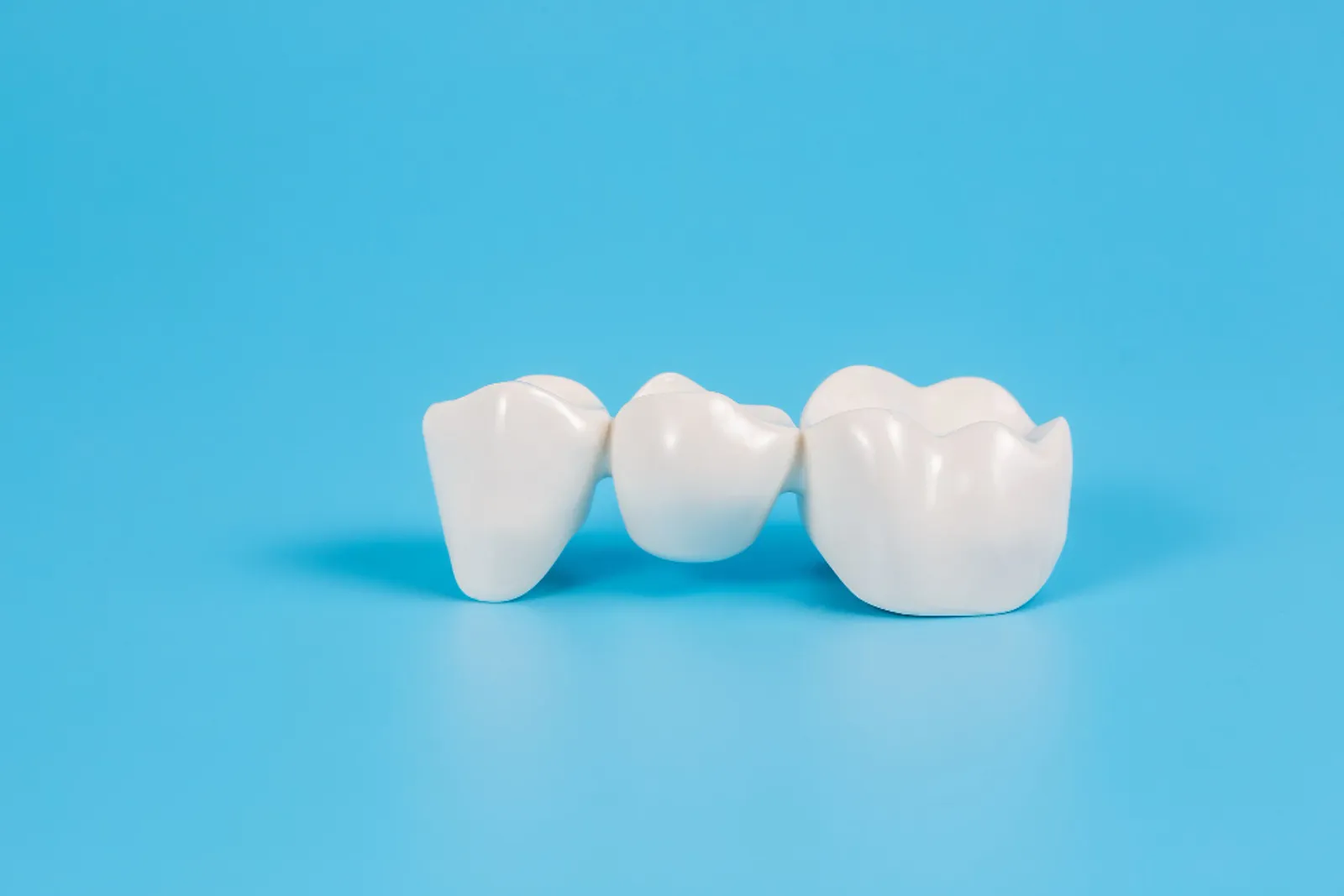
A dental bridge is a fixed restoration that replaces one or more missing teeth by literally bridging the gap left behind. It consists of a replacement tooth, or teeth, fused to crowns on either side, which are anchored to your natural teeth or to dental implants placed in the gap.
How Does a Dental Bridge Restore the Tooth?
Rather than replacing a missing tooth in isolation, a bridge uses the teeth or implants next to the gap as anchor points, distributing bite force across them the way your natural teeth would have shared it. This restores the ability to chew normally on that side of your mouth and stops neighbouring teeth from gradually drifting into the empty space, which is a common consequence of leaving a gap untreated.
What Dental Problems Can a Dental Bridge Treat?
Bridges address the gap left by one or more missing teeth, whether lost to decay, injury, or extraction. Beyond restoring chewing function, closing the gap also helps prevent the shifting of neighbouring teeth and changes to your bite that can otherwise develop over time when a missing tooth is left unaddressed.
Types of Dental Bridges
- Traditional (tooth-supported) bridge. Crowns are placed on the natural teeth either side of the gap, with the replacement tooth fused between them. The most common type when neighbouring teeth are healthy enough to support crowns.
- Implant-supported bridge. The bridge is anchored to dental implants rather than natural teeth, generally recommended when several teeth in a row are missing or when the neighbouring natural teeth aren’t suitable to be reshaped for crowns.
- Cantilever bridge. Anchored to a supporting tooth on only one side of the gap, used less often and only in specific clinical situations.
Traditional vs. Implant-Supported Bridges
The main difference is what the bridge is anchored to. A traditional bridge uses your own natural teeth as support, which means those teeth need to be reshaped for crowns, a permanent change even if they were otherwise healthy. An implant-supported bridge is anchored to titanium implants placed in the jawbone instead, leaving neighbouring natural teeth untouched, but it requires a surgical procedure and a healing period before the bridge itself can be fitted. Which approach fits your case depends on the condition of your remaining teeth, your bone health, and how many teeth need replacing.
Who Is a Suitable Candidate?
Most patients missing one or more teeth in a row are candidates for a bridge, provided the neighbouring teeth (for a traditional bridge) are healthy enough to support crowns, or there’s enough bone to support implants (for an implant-supported bridge). Gum health and overall bite are also assessed, since these affect how well a bridge fits and functions long term.
This section is general information. Individual candidacy can only be confirmed after a clinical examination, medical history review, and diagnostic imaging by a qualified dentist.
When May a Different Treatment Be Recommended?
If only a single tooth is missing and the neighbouring teeth are completely healthy, a single dental implant may be recommended instead, since it doesn’t require reshaping otherwise sound teeth. If several teeth are missing across most of an arch, a full-arch solution like All-on-4 may be more appropriate than multiple individual bridges.
Your Consultation and Dental Assessment
Share details of the gap you’re looking to address, along with any existing X-rays, through our contact form or WhatsApp. Our team follows up with an initial assessment and a free quote, though a final plan and price are confirmed once your dentist has examined the site in person and reviewed imaging.
What Diagnostic Tests Are Required?
A clinical examination and X-ray are used to assess the health of the neighbouring teeth and the bone beneath the gap. If an implant-supported bridge is being considered, a CT scan is generally needed to evaluate bone volume before a firm plan can be confirmed.
Dental Bridges Procedure: Step by Step
- Assessment. Examination and imaging of the gap and the condition of neighbouring teeth or bone.
- Preparation. For a traditional bridge, the anchor teeth are reshaped for crowns; for an implant-supported bridge, implants are placed first and given time to heal.
- Impressions or digital scanning. Used to design a bridge that fits precisely and matches your bite.
- Fitting. The bridge is checked for fit and bite before being permanently secured.
Will You Need Local Anaesthesia?
Yes, preparing the anchor teeth, or placing implants for an implant-supported bridge, is carried out under local anaesthesia. Fitting the final bridge at a later visit doesn’t usually require anaesthesia.
Will the Natural Tooth Need Preparation?
For a traditional bridge, yes: the teeth either side of the gap are reshaped to hold the crowns that anchor the bridge, similar to preparing a tooth for a single crown. An implant-supported bridge doesn’t require any reshaping of natural teeth, since it’s anchored to implants instead.
Will You Need a Temporary Restoration?
Yes. A temporary bridge or temporary crowns are fitted while your final, custom-made bridge is being made, so you’re not left with an open gap or unprotected prepared teeth in the meantime.
How Long Does a Dental Bridge Take?
A traditional bridge is usually completed across two visits within a week or two. An implant-supported bridge takes longer overall, since the implants need a healing period, typically a few months, before the bridge itself can be fitted.
How Many Appointments Are Required?
A traditional bridge generally needs two appointments: one to prepare the teeth and fit a temporary, and a second to fit the final bridge. An implant-supported bridge needs at least one additional visit for implant placement, followed by a separate visit for the bridge once healing is complete.
How Long Should You Stay in Istanbul?
For a traditional bridge, plan for a stay of at least 5 to 7 days to cover both appointments. For an implant-supported bridge, your first visit covers implant placement, and a second, separate trip a few months later covers fitting the bridge once healing is confirmed.
Recovery and Tooth Sensitivity
There’s no surgical recovery involved in a traditional bridge, though mild sensitivity around the prepared teeth is common for a few days. If implants are involved, recovery follows the same pattern as dental implant surgery, with some swelling and soreness in the days after placement.
Eating and Drinking After Treatment
With a temporary bridge in place, avoid sticky or very hard foods, since temporary restorations aren’t as strong as the final bridge. Once your final bridge is fitted and any implant healing is complete, you can eat normally.
How to Care for Your Restoration
Cleaning under a bridge takes a bit more care than natural teeth, since the replacement tooth doesn’t have a gum to floss around in the usual way. Your dentist will show you how to use floss threaders or an interdental brush to clean beneath the bridge, which helps prevent decay or gum problems around the anchor teeth.
Benefits of Dental Bridges
A bridge restores your ability to chew and speak normally, prevents neighbouring teeth from drifting into the gap over time, and is a fixed solution rather than something you take in and out. Compared with an implant, a traditional bridge doesn’t require surgery and is generally completed faster.
Risks, Limitations and Possible Complications
For a traditional bridge, the main risk is to the anchor teeth themselves: reshaping them for crowns is irreversible, and they carry extra load supporting the bridge, which can occasionally lead to problems with those teeth later on. For an implant-supported bridge, the risks are the same as those of implant surgery, including infection or, rarely, an implant not integrating with the bone.
How Long Does a Dental Bridge Last?
Most bridges last a decade or more with good care. Traditional bridges depend heavily on the ongoing health of the anchor teeth; implant-supported bridges tend to be very durable, since implants don’t decay the way natural teeth can.
What Can Damage or Shorten Its Lifespan?
Decay developing in an anchor tooth is the most common reason a traditional bridge needs attention earlier than expected, which is why cleaning underneath it properly matters so much. Grinding or clenching your teeth, and biting down on very hard foods, can also put excess stress on a bridge over time.
Can the Restoration Be Repaired or Replaced?
A bridge itself is a single fabricated piece, so significant damage generally means replacement rather than repair. If an anchor tooth beneath a traditional bridge develops decay, that tooth, and potentially the bridge along with it, will need to be treated or remade, which is why prevention through good cleaning habits matters.
Alternatives to Dental Bridges
- Bridge vs. implant. A single-tooth implant avoids reshaping neighbouring teeth entirely but involves surgery and a longer overall timeline; a bridge is faster and surgery-free for a traditional bridge, but relies on the neighbouring teeth for support.
- Bridge vs. removable partial denture. A removable denture doesn’t require reshaping any teeth or surgery, but is taken in and out and generally doesn’t feel as stable or natural as a fixed bridge.
- Leaving the gap. Not replacing a missing tooth risks neighbouring teeth drifting and bite changes over time, so most dentists recommend some form of replacement once a tooth is lost.
Dental Bridges vs. Dental Implants
Both are fixed, permanent ways to replace a missing tooth, but they work differently. A bridge uses the teeth either side of the gap as support, which means reshaping them for crowns even if they were previously untouched by decay. An implant replaces the missing tooth’s root directly in the jawbone, leaving neighbouring teeth alone, but requires surgery, adequate bone volume, and a healing period before the visible restoration is fitted. Bridges are generally faster and don’t require surgery; implants avoid altering healthy teeth and tend to help preserve jawbone at the site of the missing tooth. Your dentist can help you weigh which fits your case, bone health, and timeline.
Materials Used for Dental Bridges
Bridges are generally made from the same materials used for crowns: zirconia for strength, particularly on back teeth, or E.max for a more translucent, natural look on front teeth. Porcelain-fused-to-metal is also used in some cases where extra strength is needed across a longer span.
Choosing the Right Material
The right material depends on where the bridge sits in your mouth, how many teeth it needs to replace, and your aesthetic priorities. A longer bridge spanning several teeth generally needs a stronger material to handle the additional bite forces involved.
Dental Bridges Cost at Dentavivo
At Dentavivo, dental bridges start from €395. The exact price depends on the number of teeth being replaced, the material chosen, and whether the bridge is tooth-supported or implant-supported, since implant-supported bridges include the cost of the implants themselves.
We don’t publish a single fixed price for every case, since every patient’s situation is different. Share some details about your case through our contact form or WhatsApp, and our team will follow up with a clear, personalized quote.
What Is Included in the Price?
Your quote covers the consultation, preparation of the anchor teeth or implant placement, the temporary restoration, the final custom-made bridge, and its fitting. Any extractions or additional treatment needed beforehand are quoted separately as part of your overall plan.
What Factors Affect the Final Cost?
The number of teeth being replaced and whether you choose a traditional or implant-supported bridge are the main factors, along with the material selected for the visible restoration.
What Is Included for International Patients?
Once you share your case with us, our team reviews it and follows up with a personalised treatment plan and a free quote, confirmed only after your consultation and examination, so there are no surprises once you arrive. We stay in touch by WhatsApp and email throughout, and help you plan your visit dates, particularly if your bridge involves implants and a healing period between two separate trips.
Before and After Dental Bridges
Bridges restore a natural-looking, complete smile after tooth loss. You can see genuine, unedited bridge cases from Dentavivo patients in our Before & After gallery.
Real Restorative Dentistry Cases
Beyond individual bridge cases, our Before & After gallery includes a wider range of restorative work, including crowns, root canal-treated teeth, and combination cases, so you can see the kind of results our team achieves across different types of restorative dentistry.
Meet the Dentist Behind Your Treatment
Restorative treatment at Dentavivo is medically reviewed by Dr. Mine Helvacıoğlu Özkardeş, a prosthodontist with 14+ years of experience in crowns, bridges, and implant-supported restorations. You can read her full background, education, and publications on her profile page.
Why Choose Dentavivo for Dental Bridges?
Dentavivo has been treating international patients in Istanbul for over a decade, with restorative treatment planning led by a prosthodontist experienced in both traditional and implant-supported bridge work. Every case is confirmed individually after a clinical examination, and you can see genuine, unedited results from real patients rather than stock photography.
Treatment Warranty and Conditions
The specific warranty terms that apply to your bridge, covering material and workmanship, and, where relevant, the implants used to support it, are confirmed in writing as part of your personalised treatment plan before you proceed. Your dentist will explain exactly what’s covered, and for how long, during your consultation.
Medical Review and References
This page was last reviewed on 4 August 2026 by Dr. Mine Helvacıoğlu Özkardeş. Where possible, it links to independent sources rather than asking you to take our word for it:
- American Dental Association (ADA): the U.S. professional association for dentists, publishing evidence-based clinical guidance and patient resources.
- National Institute of Dental and Craniofacial Research (NIDCR): part of the U.S. National Institutes of Health, publishing independent research and patient education on oral health.
Content on this page is general dental information reviewed by Dentavivo's dental team. It is not a substitute for individual medical advice. Treatment plans, suitability, and costs are confirmed only after a personal consultation and clinical examination.
Frequently Asked Questions
What is a dental bridge?
A dental bridge is a fixed restoration that replaces one or more missing teeth, using a replacement tooth fused to crowns that anchor to the natural teeth or implants either side of the gap.
How much does a dental bridge cost?
At Dentavivo, bridges start from €395, though the exact price depends on how many teeth are being replaced and whether the bridge is tooth-supported or implant-supported. Share your case with us for a free, personalised quote.
Is a dental bridge permanent?
A bridge is a fixed restoration, cemented or attached in place rather than removable, but it isn't permanent in the sense of lasting forever. Most bridges last a decade or more with good care before eventually needing replacement.
How long do dental bridges last?
With good oral hygiene and regular check-ups, a well-fitted bridge can last a decade or more. Lifespan depends on the material used, your bite forces, and how well the supporting teeth or implants stay healthy over time.
Is a bridge or an implant more suitable for me?
This depends on factors such as the condition of the teeth next to the gap, your bone health, and personal preference. A bridge doesn't require surgery and can be completed faster, while an implant doesn't involve reshaping healthy neighbouring teeth. Your dentist can advise which option best suits your clinical situation.
Do the teeth next to the gap need to be healthy?
For a traditional, tooth-supported bridge, the neighbouring teeth need to be reshaped to hold the crowns that anchor the bridge, so their health and structure matter. If they're already compromised, an implant-supported bridge, which doesn't rely on natural teeth for support, may be recommended instead.
Does getting a bridge hurt?
Preparing the supporting teeth is carried out under local anaesthesia, so you shouldn't feel pain during the appointment. Some sensitivity around the prepared teeth for a few days afterward is normal and generally manageable with over-the-counter pain relief.
Will a dental bridge look natural?
Yes. Bridges are made from tooth-coloured materials such as zirconia or E.max, shaped and shaded to match your surrounding teeth, so the replacement tooth blends in with the rest of your smile.
How do you clean a dental bridge?
You brush a bridge as you would natural teeth, but the area underneath the replacement tooth needs extra attention, since it doesn't have a gum to floss around in the usual way. Your dentist will show you how to use a floss threader or interdental brush to clean beneath it properly.
Does dental insurance cover bridges?
Coverage varies widely by country and provider, and many plans only cover bridges partially or not at all. This is one reason patients travel to Istanbul for treatment: even without insurance, Dentavivo's pricing is often more affordable than paying out-of-pocket at home. We recommend checking with your own insurer about any partial reimbursement for treatment received abroad.
Related Treatments
Dental Implants
A permanent, natural-looking solution for missing teeth.
Dental Crowns
A custom-made cap that covers a damaged or weakened tooth to restore its strength, shape, and appearance.
All-on-4 Full-Arch Treatment
A full arch of new teeth, supported by just four implants.
Tooth Extraction
The removal of a tooth that cannot be saved or is causing clinical problems, sometimes followed by a tooth-replacement option.
This page provides general information and does not constitute individual medical advice. Treatment suitability, plans, and costs can only be confirmed after a personal consultation and clinical examination with a qualified dentist. Individual results vary.