'%3e%3cpath%20d='M923.21,488.13c-3.16-7.79-8-17.56-17.57-23.98-7.1-4.71-15.4-7.26-26.92-8.25h-.1c-10.32-.4-20.27,1.96-29.91,4.23-4.24,1-8.63,2.04-12.86,2.79-.6,.09-1.21,.19-1.82,.29-6.34,1.01-12.33,1.96-16.47-2.28-4.53-4.5-7.47-10.23-10.59-16.29-.45-.87-.9-1.74-1.35-2.61-.72-1.39-1.44-2.8-2.16-4.23-4.16-8.22-8.45-16.73-15.65-23.28-18.43-15.29-34.28-18.48-54.69-10.97-22.67,8.36-37.54,33.4-42.24,54.59-2.87,15.38-2.15,32.19,2.13,49.98l.45,1.85,7.53-1-.13-1.98c-.85-12.5-1.5-25.81,.63-39.05,.24-1.82,.61-3.79,.97-5.69,.12-.62,.23-1.23,.34-1.83,4.21-17.82,16.55-38.81,34.65-45.55,15.72-5.72,26.37-3.71,40.67,7.66,6.3,4.96,10.7,13.81,15.36,23.17,5.29,10.63,10.77,21.63,19.58,27.24,9.41,5.91,24.21,2.42,38.51-.96,10.72-2.53,21.81-5.15,29.92-3.62l.12,.02c12.7,1.61,20.97,6.61,26.03,15.76,2.9,5.15,4.68,9.37,5.58,13.21,2.52,12.29-.58,26.58-9.2,42.48-4.39,8.11-10.97,15.51-20.12,22.64-4.9,3.85-10.66,7.32-16.23,10.67-3.81,2.29-7.75,4.66-11.4,7.15-20.44,14.22-31.7,35.12-40.01,53.69l3.67,2.08c1.54-2.21,3.06-4.45,4.58-6.68,4.48-6.59,9.11-13.41,14.4-19.52,8.3-9.69,17.35-17.36,26.89-22.78,1.41-.81,4.32-2.51,6.88-4.01,1.58-.92,3.03-1.77,3.91-2.29,14.97-8.65,25.81-17.81,33.19-28.03,6.62-9.57,11.72-20.52,14.35-30.83,3.21-12.58,2.9-23.94-.94-33.77Z'/%3e%3cpath%20d='M214.5,531.7c6.65,3.39,11.75,8.22,15.29,14.51,3.54,6.29,5.32,13.7,5.32,22.22s-1.77,15.91-5.32,22.16c-3.54,6.25-8.64,11.03-15.29,14.33-6.65,3.31-14.51,4.96-23.59,4.96h-25.92v-83.27h25.92c9.08,0,16.94,1.69,23.59,5.08Zm1.02,60.69c5.65-5.69,8.48-13.68,8.48-23.95s-2.85-18.44-8.54-24.25c-5.7-5.81-13.88-8.72-24.55-8.72h-15.05v65.46h15.05c10.75,0,18.95-2.85,24.61-8.54Z'/%3e%3cpath%20d='M260.31,535.46v27.83h30.34v8.96h-30.34v28.67h33.93v8.96h-44.8v-83.38h44.8v8.96h-33.93Z'/%3e%3cpath%20d='M376.19,609.89h-10.87l-43.72-66.3v66.3h-10.87v-83.38h10.87l43.72,66.18v-66.18h10.87v83.38Z'/%3e%3cpath%20d='M445.96,526.62v8.84h-22.7v74.42h-10.87v-74.42h-22.82v-8.84h56.39Z'/%3e%3cpath%20d='M508.55,591.37h-36.32l-6.69,18.52h-11.47l30.1-82.79h12.54l29.98,82.79h-11.47l-6.69-18.52Zm-3.11-8.84l-15.05-42.05-15.05,42.05h30.1Z'/%3e%3cpath%20d='M608.66,526.62l-31.42,83.27h-12.54l-31.42-83.27h11.59l26.16,71.8,26.16-71.8h11.47Z'/%3e%3cpath%20d='M631.48,526.62v83.27h-10.87v-83.27h10.87Z'/%3e%3cpath%20d='M718.8,526.62l-31.42,83.27h-12.54l-31.42-83.27h11.59l26.16,71.8,26.16-71.8h11.47Z'/%3e%3cpath%20d='M747.35,605.29c-6.37-3.62-11.41-8.68-15.11-15.17-3.7-6.49-5.55-13.8-5.55-21.92s1.85-15.43,5.55-21.92c3.7-6.49,8.74-11.55,15.11-15.17,6.37-3.62,13.42-5.44,21.15-5.44s14.89,1.81,21.26,5.44c6.37,3.62,11.39,8.66,15.05,15.11,3.66,6.45,5.5,13.78,5.5,21.98s-1.83,15.53-5.5,21.98c-3.66,6.45-8.68,11.49-15.05,15.11-6.37,3.62-13.46,5.44-21.26,5.44s-14.77-1.81-21.15-5.44Zm36.85-8.06c4.66-2.71,8.32-6.57,10.99-11.59,2.67-5.02,4-10.83,4-17.44s-1.33-12.52-4-17.5c-2.67-4.98-6.31-8.82-10.93-11.53-4.62-2.71-9.88-4.06-15.77-4.06s-11.15,1.35-15.77,4.06c-4.62,2.71-8.26,6.55-10.93,11.53-2.67,4.98-4,10.81-4,17.5s1.33,12.42,4,17.44c2.67,5.02,6.33,8.88,10.99,11.59,4.66,2.71,9.89,4.06,15.71,4.06s11.05-1.35,15.71-4.06Z'/%3e%3c/g%3e%3c/svg%3e)

Written by Sedef Özdemir · Content Specialist

Medically reviewed by Dr. Mine Helvacıoğlu Özkardeş, Prosthodontist
14+ years of experience in smile design, veneers, and implant-supported restorations.
Last reviewed: 4 August 2026
What Are Dental Veneers?
Dental veneers are thin, custom-made shells bonded to the front surface of a tooth. They’re used to change how a tooth looks, its colour, shape, size, or alignment appearance, while preserving much of the tooth’s underlying natural structure.
What Smile Concerns Can Veneers Improve?
Veneers are generally used to address discolouration that doesn’t respond to whitening, minor chips or wear, small gaps between teeth, or teeth that are slightly misshapen or uneven in length. They’re a cosmetic solution rather than a structural one, so significant bite or alignment issues are usually addressed with orthodontic treatment first.
Types of Dental Veneers
- Porcelain veneers. Custom-fabricated in a dental laboratory from thin ceramic shells, valued for their strength and natural, light-reflecting appearance.
- E.max veneers. A lithium disilicate ceramic known for exceptional translucency, often chosen when a very natural look is the priority.
- Composite veneers. Built up directly on the tooth from composite resin in a single visit, generally more affordable but less durable than porcelain or E.max.
Which type suits you depends on your budget, timeline, and how much change you’re looking for, something your dentist can walk you through at consultation.
Who Is a Suitable Candidate?
Most patients with healthy teeth and gums who want to improve the colour, shape, or alignment appearance of their smile are candidates for veneers. Enough healthy enamel needs to remain to bond the veneer securely, and any active decay or gum disease is generally treated first.
This section is general information. Individual candidacy can only be confirmed after a clinical examination, medical history review, and diagnostic imaging by a qualified dentist.
When May Veneers Not Be Suitable?
If a tooth has significant decay, a large old filling, or has had root canal treatment, a crown may offer more durable protection than a veneer, which is designed mainly to cover the front surface. Veneers also aren’t a substitute for orthodontic treatment if teeth are significantly misaligned, and patients with untreated teeth grinding may need that addressed first to protect the investment.
Your Smile Consultation and Assessment
Share photos of your smile and what you’d like to change through our contact form or WhatsApp, and our team will follow up with an initial assessment and a free quote. A final plan, including material choice and shade, is confirmed once your dentist has examined your teeth and gums in person.
How Is Your Smile Designed?
Your dentist plans your new smile around your facial features, lip line, and existing teeth, often using photos and, in some cases, a mock-up or digital preview so you can see the intended result before any tooth is touched.
Choosing the Right Tooth Shape and Proportions
Tooth shape and proportion have a big impact on how a smile reads, softer, rounder shapes generally look gentler, while squarer shapes can look bolder. Your dentist balances shape with your facial features and what you’re used to seeing in the mirror, so the result feels like an enhanced version of your smile rather than a completely different one.
Choosing the Right Tooth Shade
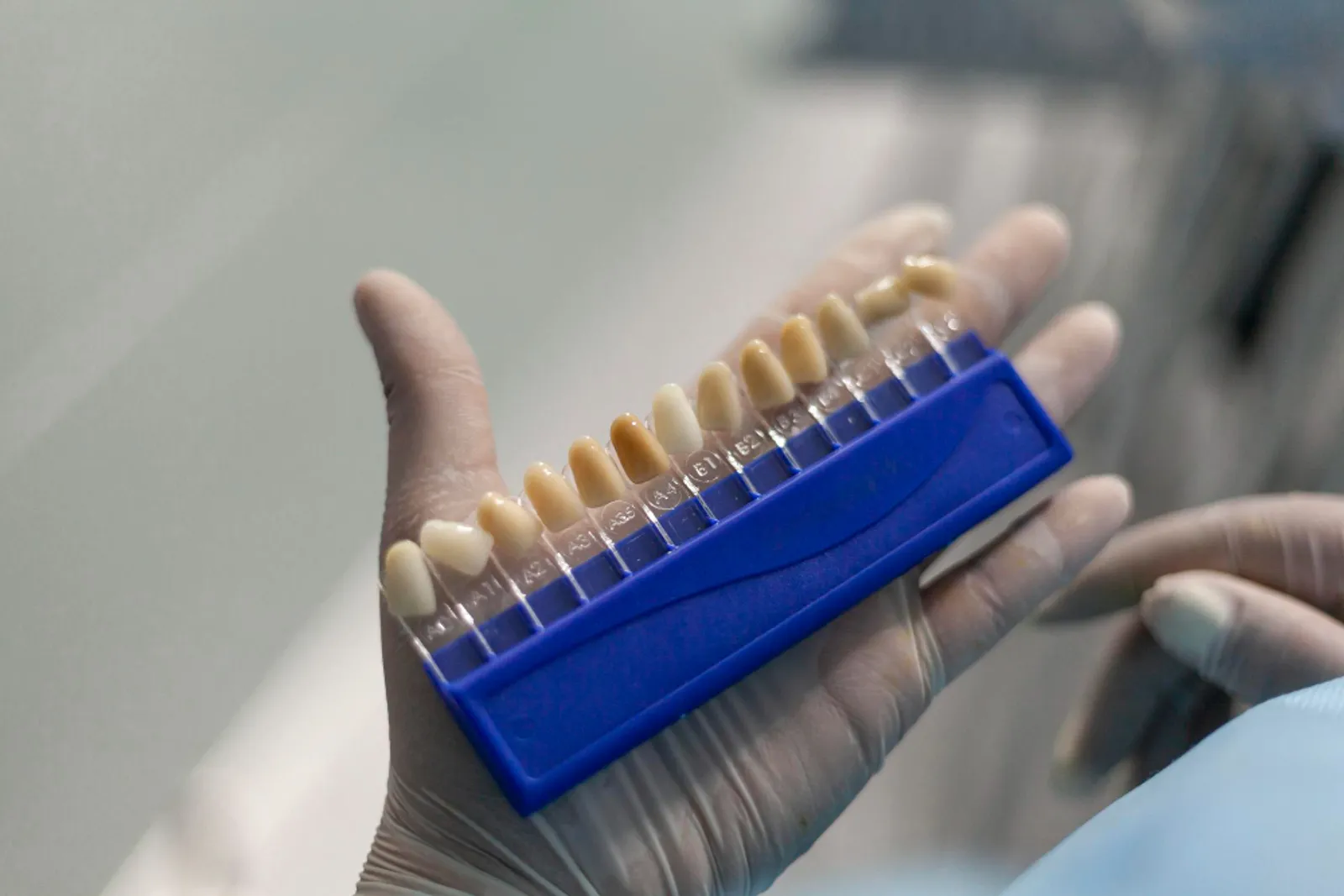
Veneer shade is selected against a shade guide during your consultation, factoring in your natural skin tone and the colour of any adjacent teeth that aren’t being treated, so the result blends in rather than looking artificially white against surrounding teeth.
Natural-Looking vs. Bright Smile Results
Some patients want a subtle enhancement that still looks like their own teeth; others prefer a brighter, more uniform result. Both are achievable with veneers, the difference comes down to shade and shape choices made during smile design, so it’s worth being clear with your dentist about which direction you want before treatment begins.
Dental Veneers Procedure: Step by Step
- Consultation and smile design. Discussion of your goals, clinical examination, and shade and shape planning.
- Preparation. A thin layer of enamel may be removed from the tooth surface, depending on the veneer type chosen.
- Impressions or digital scanning. Used to design custom veneers that match your planned shape and shade.
- Fitting. Veneers are checked for fit, colour match, and bite before being permanently bonded in place.
How Much Natural Tooth Is Prepared?
For porcelain or E.max veneers, a thin layer of enamel, often less than a millimetre, is typically removed to make room for the veneer without it looking or feeling bulky. Composite veneers usually require little to no removal of tooth structure, since the resin is built up on the tooth’s surface rather than replacing it.
Is Dental Veneers Treatment Reversible?
Porcelain and E.max veneers are generally not fully reversible, since some enamel is removed to fit them and that tooth will always need a veneer or similar restoration afterward. Composite veneers, which involve minimal to no tooth preparation, can sometimes be removed with less impact on the underlying tooth, though this depends on the individual case.
Will You Need Temporary Restorations?
If you’re having porcelain or E.max veneers, yes: temporary veneers are usually fitted while your final, custom-made veneers are being fabricated in the lab. Composite veneers don’t need a temporary stage, since they’re completed in a single visit.
How Many Teeth May Need Treatment?
This depends entirely on your goals. Some patients choose veneers for just one or two teeth to address a specific chip or discolouration, while others treat the six to ten teeth visible when smiling for a more complete, uniform result. Your dentist can advise on what achieves your goals without treating more teeth than necessary.
How Long Does Dental Veneers Treatment Take?
Composite veneers are typically completed in a single visit of 60 to 90 minutes per tooth. Porcelain or E.max veneers take longer overall, since they involve two visits with lab fabrication time in between, usually about a week.
How Many Appointments Are Required?
Composite veneers are usually finished in one appointment. Porcelain and E.max veneers generally need two: one for preparation, shade selection, and temporary veneers, and a second, about a week later, to fit the final veneers.
How Long Should You Stay in Istanbul?
For porcelain or E.max veneers, plan for a stay of at least 7 days to allow time for lab fabrication between your two appointments. If you’re only having composite veneers, a shorter visit can be sufficient.
Recovery and Sensitivity
There’s no surgical recovery involved in getting veneers. Mild sensitivity to hot or cold can occur for a few days after preparation, particularly with porcelain or E.max veneers, and generally settles on its own.
Eating and Drinking After Treatment
With temporary veneers in place, avoid sticky or very hard foods, since temporaries aren’t as strong as your final veneers. Once your permanent veneers are fitted and bonded, you can eat normally, though avoiding biting directly into very hard foods with your front teeth is sensible for any veneer.
How to Care for Your New Smile
Brush and floss veneers just as you would natural teeth, and keep up with regular check-ups so your dentist can monitor how they’re wearing. Avoiding using your front teeth to bite very hard objects, like ice or pen caps, helps protect both porcelain and composite veneers from chipping.
Benefits of Dental Veneers
Veneers can address several cosmetic concerns at once, colour, shape, chips, and minor gaps, in a way that’s more conservative than crowns, since they cover mainly the front surface of the tooth rather than the whole tooth. The material and shade are fully customisable, so results can range from a natural, subtle enhancement to a brighter, more uniform smile.
Risks and Limitations
As with any dental procedure, risks include the veneer not fitting perfectly and needing adjustment, sensitivity after preparation, or, less commonly, the veneer chipping or debonding over time. Because porcelain and E.max veneers involve removing some enamel, that tooth will need ongoing restoration going forward.
How Long Do the Results Last?
Porcelain and E.max veneers generally last 10 to 15 years or more with good care, sometimes longer. Composite veneers typically last 5 to 7 years, since the resin is softer and more prone to staining and minor chipping than ceramic.
What Can Stain or Damage the Results?
Composite veneers can pick up staining from coffee, tea, red wine, and smoking over time, similar to natural teeth, while porcelain and E.max are more stain-resistant. Grinding or clenching your teeth, and biting down on very hard foods or objects, can chip or damage any type of veneer.
Managing Bruxism After Cosmetic Treatment
If you grind or clench your teeth, this puts your veneers at real risk of chipping or debonding, particularly composite veneers, which are softer than ceramic. A nightguard is commonly recommended after veneer treatment for patients who grind their teeth, and your dentist may raise this at consultation if it’s likely to affect your results.
Alternatives to Dental Veneers
- Veneers vs. crowns. A veneer covers mainly the front of the tooth, generally used when the tooth is otherwise structurally sound; a crown covers the whole tooth and is used when more protection is needed.
- Veneers vs. teeth whitening. If discolouration is your main concern and your teeth are otherwise well-shaped and aligned, whitening alone may achieve your goal without altering tooth structure at all.
- Veneers vs. orthodontics. For significant misalignment, orthodontic treatment addresses the position of the teeth directly, whereas veneers only change their visible appearance.
Dental Veneers vs. Dental Crowns
Both are custom ceramic restorations, but they cover different amounts of the tooth. A veneer bonds to the front surface only, generally chosen when the tooth is structurally healthy and the goal is mainly cosmetic. A crown covers the entire tooth and is used when the tooth needs real structural protection, for example after significant decay or root canal treatment. Your dentist can advise which is appropriate based on the tooth’s condition.
Dental Veneers vs. Dental Bonding
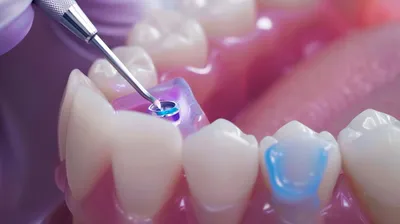
Both can address chips, gaps, and discolouration, but they differ in material, durability, and how they’re placed. Bonding uses composite resin applied and shaped directly on the tooth in a single visit, generally more affordable but less durable and more prone to staining over time. Veneers, especially porcelain or E.max, are custom-fabricated for a closer, longer-lasting match to natural tooth translucency, but cost more and, for ceramic veneers, involve a small amount of tooth preparation. Bonding is often a good starting point for smaller concerns or a lower budget, with veneers considered for a more comprehensive or long-term result.
Materials Used for Dental Veneers
At Dentavivo, veneers are available in porcelain, E.max, and composite resin, chosen based on your goals, budget, and timeline. Each material is shaped and shaded individually to match your smile design plan.
Material Comparison
E.max vs. Porcelain Veneers
Both are strong, natural-looking ceramic options, but they have slightly different strengths. E.max is particularly valued for its translucency, which can make it look closer to natural enamel, especially on front teeth where light passes through. Traditional porcelain (often layered over a stronger core) can be built up in slightly more detail for complex shape changes and is also very durable. Your dentist can advise which suits your case and goals.
Composite veneers, meanwhile, cost less and can be completed in a single visit, but generally don’t match the strength, stain resistance, or longevity of porcelain or E.max.
Dental Veneers Cost at Dentavivo
At Dentavivo, dental veneers start from €220 per tooth. The exact price depends on the material you choose, porcelain, E.max, or composite, and how many teeth are included in your plan.
We don’t publish a single fixed price for every case, since every smile design plan is different. Share some photos of your smile through our contact form or WhatsApp, and our team will follow up with a clear, personalized quote.
What Is Included in the Price?
Your quote covers the consultation and smile design, tooth preparation where needed, temporary veneers for porcelain or E.max cases, the final custom-made veneers, and their fitting. Any treatment needed first, such as addressing decay or gum health, is quoted separately.
What Factors Affect the Final Cost?
The material you choose is the main factor, along with the number of teeth included in your smile design plan. A full set of ten veneers costs more in total than treating one or two teeth, though the per-tooth price is often similar.
What Is Included for International Patients?
Once you share your case and smile goals with us, our team reviews it and follows up with a personalised treatment plan and a free quote, confirmed only after your consultation, so there are no surprises once you arrive. We stay in touch by WhatsApp and email throughout, and help you plan your visit dates around the lab fabrication time needed for porcelain or E.max veneers.
Before and After Dental Veneers
Veneer results vary considerably depending on the starting point and the shade and shape chosen, which is exactly why we publish real photos rather than describe them. You can see genuine, unedited veneer cases from Dentavivo patients in our Before & After gallery.
Real Smile Makeover Case Studies
Beyond individual veneer cases, our Before & After gallery includes fuller smile makeover results combining veneers with whitening or gum contouring, so you can see the kind of comprehensive results our cosmetic dentistry team achieves.
Meet the Cosmetic Dentistry Team
Cosmetic treatment at Dentavivo is medically reviewed by Dr. Mine Helvacıoğlu Özkardeş, a prosthodontist with 14+ years of experience in smile design and veneers. You can read her full background, education, and publications on her profile page.
Why Choose Dentavivo for Dental Veneers?
Dentavivo has been treating international patients in Istanbul for over a decade, with smile design led by a prosthodontist whose focus includes veneers specifically. Every plan is confirmed individually after a clinical examination and smile design consultation, and you can see genuine, unedited results from real patients rather than stock photography.
Treatment Warranty and Conditions
The specific warranty terms that apply to your veneers, covering material and workmanship, depend on the material chosen and are confirmed in writing as part of your personalised treatment plan before you proceed. Your dentist will explain exactly what’s covered, and for how long, during your consultation.
Medical Review and References
This page was last reviewed on 4 August 2026 by Dr. Mine Helvacıoğlu Özkardeş. Where possible, it links to independent sources rather than asking you to take our word for it:
- American Dental Association (ADA): the U.S. professional association for dentists, publishing evidence-based clinical guidance and patient resources.
- National Institute of Dental and Craniofacial Research (NIDCR): part of the U.S. National Institutes of Health, publishing independent research and patient education on oral health.
Content on this page is general dental information reviewed by Dentavivo's dental team. It is not a substitute for individual medical advice. Treatment plans, suitability, and costs are confirmed only after a personal consultation and clinical examination.
Frequently Asked Questions
What are dental veneers?
Veneers are thin, custom-made shells bonded to the front surface of a tooth to change its colour, shape, size, or alignment appearance, while preserving much of the tooth's underlying natural structure.
How much do veneers cost?
At Dentavivo, veneers start from €220 per tooth, though the exact price depends on the material you choose and how many teeth are included in your plan. Share some photos of your smile with us for a free, personalised quote.
What are dental veneers made from?
Veneers are commonly made from porcelain, E.max, or composite resin. Porcelain and E.max veneers are custom-fabricated in a dental laboratory, while composite veneers can often be shaped directly onto the tooth in a single visit. Material choice depends on your goals and should be discussed with your dentist.
What's the difference between porcelain and composite veneers?
Porcelain veneers are custom-fabricated in a dental laboratory, generally offering greater strength, stain resistance, and longevity. Composite veneers are built up directly on the tooth in a single visit, more affordable and faster, but less durable and more prone to staining over time.
Are veneers reversible?
Porcelain and E.max veneers typically require a small amount of tooth preparation, which makes the process not fully reversible. Composite veneers may involve less or no removal of tooth structure, depending on the case. Your dentist can explain what applies to your teeth.
Are veneers permanent?
Veneers are a long-term, fixed solution rather than something you take in and out, but they aren't permanent in the sense of lasting forever. Porcelain and E.max generally last 10 to 15 years or more, while composite typically lasts 5 to 7 years, before eventually needing replacement.
How long do veneers last?
Porcelain and E.max veneers generally last 10 to 15 years or more with good care, while composite veneers tend to last a shorter time, often 5 to 7 years, and are more prone to staining and chipping. Your dentist can give you a more specific estimate based on your case.
Do veneers look natural?
Yes, when planned well. Modern veneers are custom-shaded and shaped to suit your face and existing teeth, so they can look natural rather than uniformly white and identical. How natural versus how bright the result looks is something you agree with your dentist during smile design.
Can veneers stain, and can they be whitened?
Porcelain and E.max veneers are quite stain-resistant, though not entirely immune over many years; composite veneers stain more easily. None of these materials respond to teeth whitening the way natural enamel does, so once placed, a veneer's shade is fixed until it's eventually replaced.
Does dental insurance cover veneers?
Coverage varies widely by country and provider, and many plans classify veneers as cosmetic and offer limited or no coverage. This is one reason patients travel to Istanbul for treatment: even without insurance, Dentavivo's pricing is often more affordable than paying out-of-pocket at home. We recommend checking with your own insurer about any partial reimbursement for treatment received abroad.
Related Treatments
Hollywood Smile
A full smile makeover combining several cosmetic treatments, personalised to your face and goals.
Dental Crowns
A custom-made cap that covers a damaged or weakened tooth to restore its strength, shape, and appearance.
Teeth Whitening
A cosmetic treatment that uses bleaching agents to reduce staining and discolouration and lighten the natural tooth colour.
Dental Bonding
A minimally invasive way to repair chips, gaps, or discolouration in a single visit.
This page provides general information and does not constitute individual medical advice. Treatment suitability, plans, and costs can only be confirmed after a personal consultation and clinical examination with a qualified dentist. Individual results vary.