'%3e%3cpath%20d='M923.21,488.13c-3.16-7.79-8-17.56-17.57-23.98-7.1-4.71-15.4-7.26-26.92-8.25h-.1c-10.32-.4-20.27,1.96-29.91,4.23-4.24,1-8.63,2.04-12.86,2.79-.6,.09-1.21,.19-1.82,.29-6.34,1.01-12.33,1.96-16.47-2.28-4.53-4.5-7.47-10.23-10.59-16.29-.45-.87-.9-1.74-1.35-2.61-.72-1.39-1.44-2.8-2.16-4.23-4.16-8.22-8.45-16.73-15.65-23.28-18.43-15.29-34.28-18.48-54.69-10.97-22.67,8.36-37.54,33.4-42.24,54.59-2.87,15.38-2.15,32.19,2.13,49.98l.45,1.85,7.53-1-.13-1.98c-.85-12.5-1.5-25.81,.63-39.05,.24-1.82,.61-3.79,.97-5.69,.12-.62,.23-1.23,.34-1.83,4.21-17.82,16.55-38.81,34.65-45.55,15.72-5.72,26.37-3.71,40.67,7.66,6.3,4.96,10.7,13.81,15.36,23.17,5.29,10.63,10.77,21.63,19.58,27.24,9.41,5.91,24.21,2.42,38.51-.96,10.72-2.53,21.81-5.15,29.92-3.62l.12,.02c12.7,1.61,20.97,6.61,26.03,15.76,2.9,5.15,4.68,9.37,5.58,13.21,2.52,12.29-.58,26.58-9.2,42.48-4.39,8.11-10.97,15.51-20.12,22.64-4.9,3.85-10.66,7.32-16.23,10.67-3.81,2.29-7.75,4.66-11.4,7.15-20.44,14.22-31.7,35.12-40.01,53.69l3.67,2.08c1.54-2.21,3.06-4.45,4.58-6.68,4.48-6.59,9.11-13.41,14.4-19.52,8.3-9.69,17.35-17.36,26.89-22.78,1.41-.81,4.32-2.51,6.88-4.01,1.58-.92,3.03-1.77,3.91-2.29,14.97-8.65,25.81-17.81,33.19-28.03,6.62-9.57,11.72-20.52,14.35-30.83,3.21-12.58,2.9-23.94-.94-33.77Z'/%3e%3cpath%20d='M214.5,531.7c6.65,3.39,11.75,8.22,15.29,14.51,3.54,6.29,5.32,13.7,5.32,22.22s-1.77,15.91-5.32,22.16c-3.54,6.25-8.64,11.03-15.29,14.33-6.65,3.31-14.51,4.96-23.59,4.96h-25.92v-83.27h25.92c9.08,0,16.94,1.69,23.59,5.08Zm1.02,60.69c5.65-5.69,8.48-13.68,8.48-23.95s-2.85-18.44-8.54-24.25c-5.7-5.81-13.88-8.72-24.55-8.72h-15.05v65.46h15.05c10.75,0,18.95-2.85,24.61-8.54Z'/%3e%3cpath%20d='M260.31,535.46v27.83h30.34v8.96h-30.34v28.67h33.93v8.96h-44.8v-83.38h44.8v8.96h-33.93Z'/%3e%3cpath%20d='M376.19,609.89h-10.87l-43.72-66.3v66.3h-10.87v-83.38h10.87l43.72,66.18v-66.18h10.87v83.38Z'/%3e%3cpath%20d='M445.96,526.62v8.84h-22.7v74.42h-10.87v-74.42h-22.82v-8.84h56.39Z'/%3e%3cpath%20d='M508.55,591.37h-36.32l-6.69,18.52h-11.47l30.1-82.79h12.54l29.98,82.79h-11.47l-6.69-18.52Zm-3.11-8.84l-15.05-42.05-15.05,42.05h30.1Z'/%3e%3cpath%20d='M608.66,526.62l-31.42,83.27h-12.54l-31.42-83.27h11.59l26.16,71.8,26.16-71.8h11.47Z'/%3e%3cpath%20d='M631.48,526.62v83.27h-10.87v-83.27h10.87Z'/%3e%3cpath%20d='M718.8,526.62l-31.42,83.27h-12.54l-31.42-83.27h11.59l26.16,71.8,26.16-71.8h11.47Z'/%3e%3cpath%20d='M747.35,605.29c-6.37-3.62-11.41-8.68-15.11-15.17-3.7-6.49-5.55-13.8-5.55-21.92s1.85-15.43,5.55-21.92c3.7-6.49,8.74-11.55,15.11-15.17,6.37-3.62,13.42-5.44,21.15-5.44s14.89,1.81,21.26,5.44c6.37,3.62,11.39,8.66,15.05,15.11,3.66,6.45,5.5,13.78,5.5,21.98s-1.83,15.53-5.5,21.98c-3.66,6.45-8.68,11.49-15.05,15.11-6.37,3.62-13.46,5.44-21.26,5.44s-14.77-1.81-21.15-5.44Zm36.85-8.06c4.66-2.71,8.32-6.57,10.99-11.59,2.67-5.02,4-10.83,4-17.44s-1.33-12.52-4-17.5c-2.67-4.98-6.31-8.82-10.93-11.53-4.62-2.71-9.88-4.06-15.77-4.06s-11.15,1.35-15.77,4.06c-4.62,2.71-8.26,6.55-10.93,11.53-2.67,4.98-4,10.81-4,17.5s1.33,12.42,4,17.44c2.67,5.02,6.33,8.88,10.99,11.59,4.66,2.71,9.89,4.06,15.71,4.06s11.05-1.35,15.71-4.06Z'/%3e%3c/g%3e%3c/svg%3e)

Written by Sedef Özdemir · Content Specialist

Medically reviewed by Dr. Mine Helvacıoğlu Özkardeş, Prosthodontist
14+ years of experience in smile design, veneers, and implant-supported restorations.
Last reviewed: 3 August 2026
What Are Dental Implants?
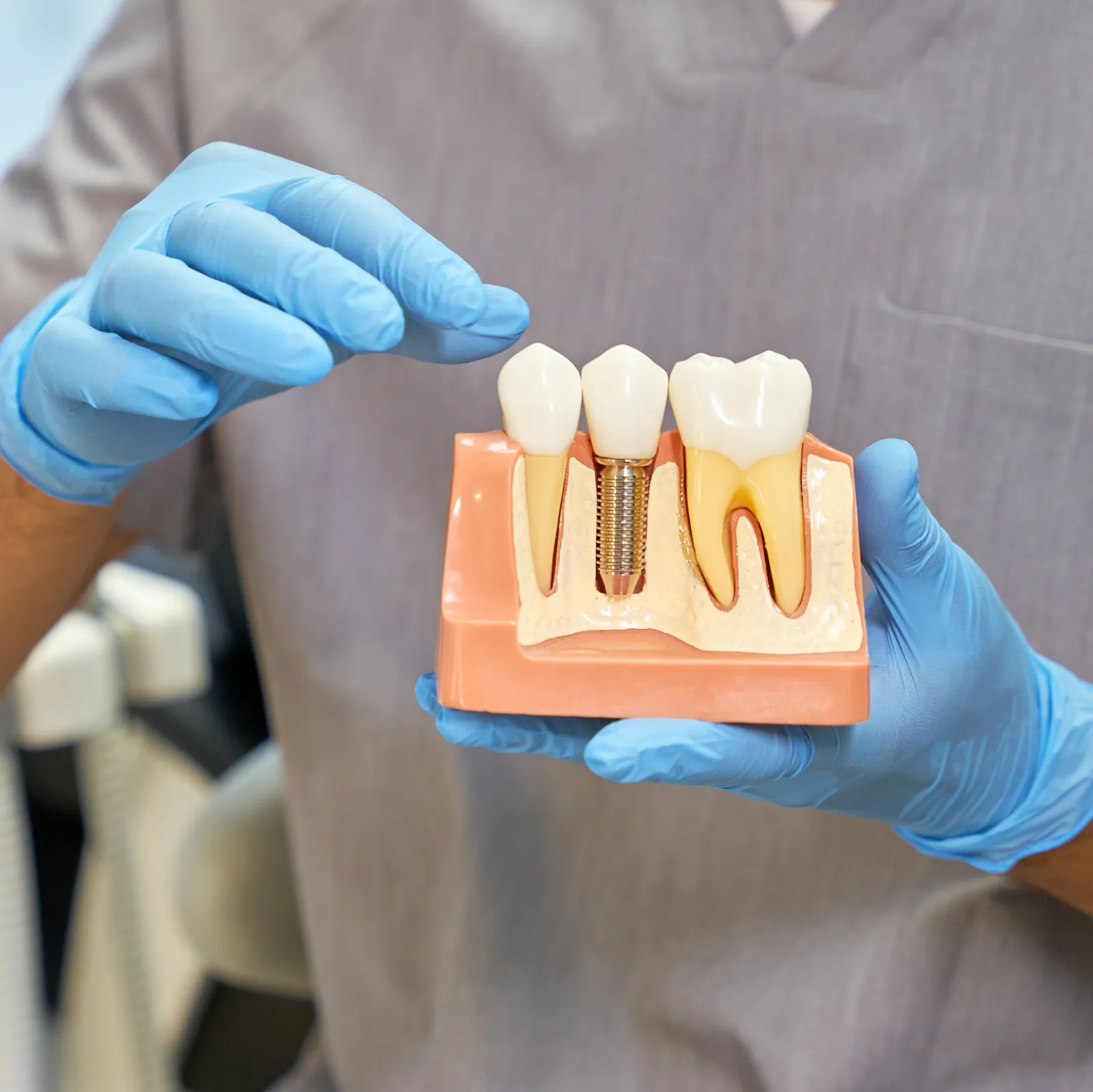
A dental implant is a small titanium or titanium-alloy post that’s surgically positioned in the jawbone where a natural tooth is missing. Over a period of healing, the surrounding bone gradually fuses to the implant’s surface, a process called osseointegration. Once that bond is stable, the implant works as an artificial tooth root, anchoring a crown, bridge, or denture in place. Unlike removable dentures, an implant-supported restoration is fixed in the mouth and doesn’t rely on neighbouring teeth for support the way a bridge does.
What Can Dental Implants Treat?
Implants are used to replace teeth lost to decay, injury, gum disease, or teeth that were never present. Beyond restoring the ability to chew and speak comfortably, they also help address a consequence of tooth loss that’s easy to overlook: the jawbone beneath a missing tooth gradually loses density over time without a root to stimulate it. An implant, by acting as a replacement root, helps preserve that bone in a way that a bridge or denture sitting on top of the gum doesn’t.
Types of Dental Implants
Not every case calls for the same kind of implant. The right option depends on your bone density, how many teeth are missing, and your overall treatment goals.
- Standard (endosteal) implants. The most common type: a single titanium post placed directly into the jawbone to support one crown. This is the typical option when one or a few teeth are missing and there is enough healthy bone to anchor the implant.
- All-on-4 full-arch implants. For patients missing most or all of their teeth in one jaw, four strategically placed implants can support a complete, fixed arch of replacement teeth. See our All-on-4 page for details.
- All-on-6 full-arch implants. A variant of the same full-arch concept using six implants instead of four, which can offer extra support where more bone is available. See our All-on-6 page.
- Implants following bone augmentation. If a CT scan shows insufficient bone volume, often in the upper back jaw, a bone graft or sinus lift may be carried out first to build up the site before an implant can be placed safely.
Which approach fits your case can only be confirmed after your dentist reviews your imaging and dental history.
Who Is a Suitable Candidate?
Dental implants are generally considered by patients who have lost one or more teeth and who have adequate bone volume and healthy gum tissue to support the implant. Good general health matters too, since conditions that affect healing, certain medications, and habits like smoking can all influence candidacy and success rates. None of these automatically rule someone out; they’re simply factors your dentist weighs up.
This section is general information. Individual candidacy can only be confirmed after a clinical examination, medical history review, and diagnostic imaging by a qualified dentist.
Consultation and Treatment Planning
Your treatment starts with sharing your case: dental and medical history, any concerns, and imaging if you already have it, through our contact form or WhatsApp. If X-rays aren’t available in advance, only a general plan can be put together at first; a precise one depends on seeing your actual imaging. From there, our team follows up with a personalised plan and a free quote before you travel, so you know roughly what to expect before you commit to a trip to Istanbul.
Dental Implants Procedure: Step by Step
- Consultation and assessment. Review of dental and medical history, imaging such as X-rays or a CT scan, and a discussion of treatment options.
- Implant placement. The implant post is placed into the jawbone, typically under local anaesthesia; general anaesthesia is available for implant surgery specifically, with anaesthesiologist approval, for patients who prefer it.
- Healing period. A period of time is generally required for the bone to integrate with the implant (osseointegration) before it can safely bear a restoration.
- Restoration. Once healing is confirmed, a custom crown, bridge, or denture is attached to the implant, completing the visible part of your new tooth.
Exact steps, timelines, and the number of visits required depend on individual clinical circumstances and will be confirmed by your dentist.
Treatment Timeline and Visits
Most implant cases involve two visits to Istanbul spaced a few months apart: one for the implant placement itself, and a second, later visit for the final restoration once healing is complete. That healing period typically runs 3 to 6 months, since the bone needs that time to properly fuse with the implant, though it varies by patient and by how many implants are involved. Your dentist will confirm a personalised timeline once your imaging has been reviewed, so you can plan your travel dates around it rather than guessing.
Recovery and Aftercare
The days immediately after implant placement matter most for a smooth recovery:
- If there’s bleeding, bite down on damp gauze for about an hour, or a moistened tea bag for 20 to 30 minutes.
- Use ice packs on the outside of your face for the first 24 hours to help with swelling.
- Wait until 48 hours have passed before starting warm salt water rinses.
- Avoid smoking for at least 72 hours; longer is better for healing.
- Plan on resting for 1 to 2 days, with your head kept elevated, including while you sleep.
- Stick to soft, cool foods while the area heals.
- Take any prescribed medication exactly as directed.
Most patients manage any discomfort with over-the-counter pain relief and describe it as pressure or soreness rather than sharp pain. Our full pre-op and aftercare guide covers preparation and recovery in more detail.
Benefits
Compared with other ways of replacing missing teeth, implants offer a few specific advantages: they look and function like natural teeth, they don’t require reshaping or relying on the teeth next to the gap the way a bridge does, and by replacing the tooth root itself, they help preserve the jawbone that would otherwise gradually shrink after tooth loss. With proper care, a well-integrated implant is designed to be a long-term, fixed solution rather than something removed at night.
Risks and Limitations
As with any surgical procedure, dental implants carry some risk, including infection or, in rare cases, the implant failing to integrate with the bone. Candidates with insufficient bone density, uncontrolled gum disease, or certain unmanaged health conditions may need additional treatment, such as a bone graft, before an implant can be placed safely. Choosing an experienced clinic and checking genuine patient reviews is one of the best ways to feel confident before booking treatment abroad.
Alternatives and Comparisons
Dental implants are one of several ways to replace missing teeth, alongside dental bridges and removable dentures.
- Implants vs. bridges. A bridge relies on the teeth either side of the gap for support, which usually means reshaping otherwise healthy teeth. An implant is anchored directly in the jawbone instead, leaving neighbouring teeth untouched.
- Implants vs. dentures. A fixed implant-supported restoration generally feels and functions closer to natural teeth than a removable denture, without the need to take it in and out. Dentures don’t require surgery, but implants tend to offer better long-term stability and bone preservation.
Implants involve a surgical placement and a healing period that bridges and dentures don’t require, so the right choice depends on your bone health, budget, and personal preference, something your dentist can help you weigh up after an examination.
Materials, Brands and Technology
Implant posts are generally made of titanium or a titanium alloy, chosen because they’re biocompatible and bond well with bone during healing; zirconia is a less common alternative some patients prefer for metal-free options. The visible crown attached to the implant is usually porcelain or zirconia, shaped and shaded to match your natural teeth.
At Dentavivo, implant treatment is available using different implant systems depending on your case and preference, including MIS implants and, for patients who prefer a premium, long-established brand, Straumann implants (from €650). Your dentist can talk you through which brand and material combination suits your case at your consultation.
Dental Implants Cost at Dentavivo
At Dentavivo, dental implants start from €320 per implant. This is one of the reasons patients travel to Istanbul, Turkey for treatment: implant costs are generally lower than in the UK, US, or Western Europe, without necessarily compromising on the materials or techniques used. The final price for your case depends on factors such as the number of implants needed, the implant brand (MIS implants start from €320; Straumann implants start from €650), and whether additional procedures, such as a bone graft or sinus lift, are required first.
We don’t publish a single fixed “package” price, since every patient’s treatment plan is different. Share some details about your case through our contact form or WhatsApp, and our team will follow up with a clear, personalized quote.
What Is Included for International Patients?
Once you share your case with us, our team reviews it and follows up with a personalised treatment plan and a free quote, confirmed only after your consultation and imaging, so there are no surprises once you arrive. We stay in touch by WhatsApp and email throughout, help you plan your visit dates around your treatment timeline, and remain available if a question comes up after you’re back home. Your quote will set out clearly what’s included for your specific case before you book anything.
Before and After Results
Real results vary from patient to patient, which is exactly why we publish real photos rather than describe them. You can see genuine, unedited implant cases from Dentavivo patients, including the one shown at the top of this page, in our Before & After gallery.
Meet the Treatment Team
Implant treatment at Dentavivo is medically reviewed by Dr. Mine Helvacıoğlu Özkardeş, a prosthodontist with 14+ years of experience in implant-supported restorations, smile design, and veneers, and a member of the International Team for Implantology (ITI). You can read her full background, education, and publications on her profile page.
Medical Review and References
This page was last reviewed on 3 August 2026 by Dr. Mine Helvacıoğlu Özkardeş. Where possible, it links to independent sources rather than asking you to take our word for it:
- International Team for Implantology (ITI): a global academic organisation dedicated to implant dentistry education and research. Dr. Helvacıoğlu Özkardeş is a member.
- American Dental Association (ADA): the U.S. professional association for dentists, publishing evidence-based clinical guidance and patient resources.
- National Institute of Dental and Craniofacial Research (NIDCR): part of the U.S. National Institutes of Health, publishing independent research and patient education on oral health.
Content on this page is general dental information reviewed by Dentavivo's dental team. It is not a substitute for individual medical advice. Treatment plans, suitability, and costs are confirmed only after a personal consultation and clinical examination.
Frequently Asked Questions
Do dental implants hurt?
Dental implant placement is typically carried out under local anaesthesia, so most patients feel pressure rather than pain during the procedure itself. Some soreness, swelling, or mild discomfort in the days afterward is normal and can usually be managed with over-the-counter pain relief. Your dentist will give you specific aftercare guidance to help keep you comfortable during healing.
Are dental implants safe?
Dental implants are a well-established treatment used worldwide, with a long track record when placed by a qualified dentist after a proper examination and imaging. As with any surgical procedure, there are risks to discuss beforehand, including infection or implant failure in rare cases. Choosing an experienced clinic in Turkey, and checking genuine patient reviews, is one of the best ways to feel confident before booking treatment.
How long do dental implants last?
With good oral hygiene and regular dental check-ups, dental implants can last for many years, decades for some patients. The crown attached to the implant may need replacement over time due to normal wear, but the implant post itself is designed as a long-term solution once it has properly integrated with the jawbone. Keeping up with aftercare after your treatment in Istanbul is one of the simplest ways to help your implant last.
How much do dental implants cost in Turkey at Dentavivo?
At Dentavivo, dental implants start from €320 per implant. The final price depends on the number of implants, the brand used, and whether procedures like a bone graft or sinus lift are also needed. Share your case with us for a free, personalized quote.
Does insurance cover dental implants?
Coverage varies widely by country and provider, and many private dental insurance plans offer limited or no coverage for implants. This is one reason patients travel to Istanbul, Turkey for treatment: even without insurance, Dentavivo's pricing (from €320 per implant) is often more affordable than paying out-of-pocket at home. We recommend checking with your own insurer about any partial reimbursement for treatment received abroad.
What if I'm missing most or all of my teeth, not just one?
For extensive tooth loss, a single-tooth implant approach usually isn't the most practical option. Full-arch solutions like All-on-4 or All-on-6 use four or six strategically placed implants to support a complete, fixed set of replacement teeth instead of replacing every missing tooth individually. Your dentist can tell you which approach fits your case after reviewing your imaging.
What are dental implants?
A dental implant is a small titanium or titanium-alloy post placed into the jawbone to replace the root of a missing tooth. Over a period of healing, the surrounding bone fuses to the implant in a process called osseointegration, after which it can support a crown, bridge, or denture. Unlike removable dentures, an implant-supported restoration is fixed in place and doesn't rely on neighbouring teeth for support.
How do dental implants work?
The implant post is placed into the jawbone under local anaesthesia, then left to heal and fuse with the surrounding bone over a period of weeks to months. Once that integration is confirmed, a connector piece is attached and a custom-made crown, bridge, or denture is fitted on top. The result functions similarly to a natural tooth root, supporting normal biting and chewing.
What are dental implants made of?
Most implant posts are made from titanium or a titanium alloy, chosen because it's strong, lightweight, and integrates well with living bone. The visible crown on top is usually made from porcelain or zirconia, materials selected to match the colour and appearance of your natural teeth. Your dentist can talk you through the specific brands and materials used for your case.
What are the different types of dental implants?
The most common type is the endosteal implant, a screw-shaped post placed directly into the jawbone, suitable for most patients with adequate bone volume. Other approaches include subperiosteal implants, placed under the gum but on top of the jawbone for patients with insufficient bone height, and full-arch systems like All-on-4 or All-on-6 for patients missing most or all of their teeth. Your dentist will recommend the right type after reviewing your imaging and treatment goals.
Related Treatments
All-on-4 Full-Arch Treatment
A full arch of new teeth, supported by just four implants.
All-on-6 Full-Arch Treatment
A full arch of new teeth, supported by six implants for extra stability.
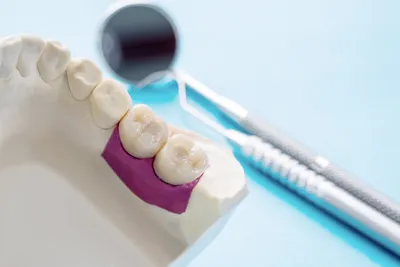
Dental Bridges
A fixed restoration that replaces one or more missing teeth by anchoring to neighbouring teeth or implants.
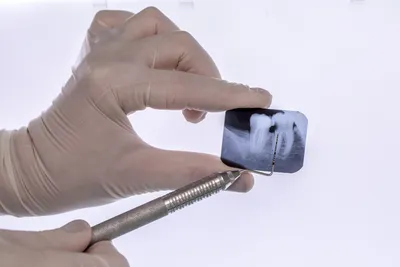
Bone Graft
Rebuilds bone volume in the jaw, often needed before implants can be placed.
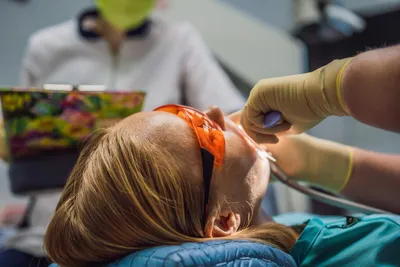
Sinus Lift
A bone-augmentation procedure that adds bone below the sinus, sometimes required before implants can be placed in the upper back jaw.
This page provides general information and does not constitute individual medical advice. Treatment suitability, plans, and costs can only be confirmed after a personal consultation and clinical examination with a qualified dentist. Individual results vary.